Some smiles can’t be rebuilt by one dentist in one visit. When a patient is missing many teeth, the best results often come from two specialists planning together: one focused on the surgery, the other on how the final teeth look and work. This case study follows one of those cases at our practice, treated by Dr. Iham Gammas, our implantologist, and Dr. Haroutioun Kotchinian, who handled the restorative work.
The case was first written up by both doctors for Implant Practice US. Below is a patient-friendly summary of what they did and why. The full clinical article is linked in the references at the end of this page.
The patient: missing teeth and dentures that didn’t fit
A 77-year-old retired man came in because chewing had become difficult and he was unhappy with how his smile looked. Over the years, decay had cost him many teeth. He had already been through fillings, extractions and dentures, but his dentures were loose and uncomfortable when he ate, spoke or smiled.
His exam showed several missing, decayed and broken teeth, plus heavy wear on the teeth he still had. His health history (high blood pressure, managed with medication, and a penicillin allergy) was reviewed as part of the plan. One helpful detail: his remaining front upper teeth sat in a good position relative to his lips, which gave the team a starting point for designing his new smile.
The plan: two doctors, one blueprint
Instead of one standard solution, the doctors built a plan around what could be saved and what needed replacing:
- Remove two upper teeth that couldn’t be saved.
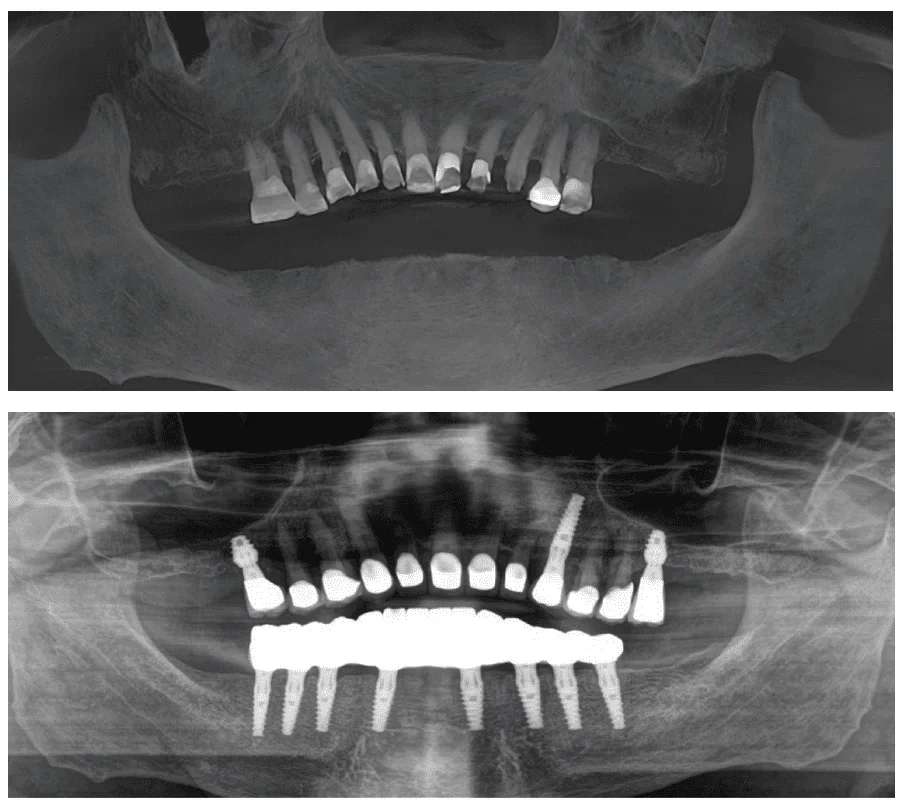
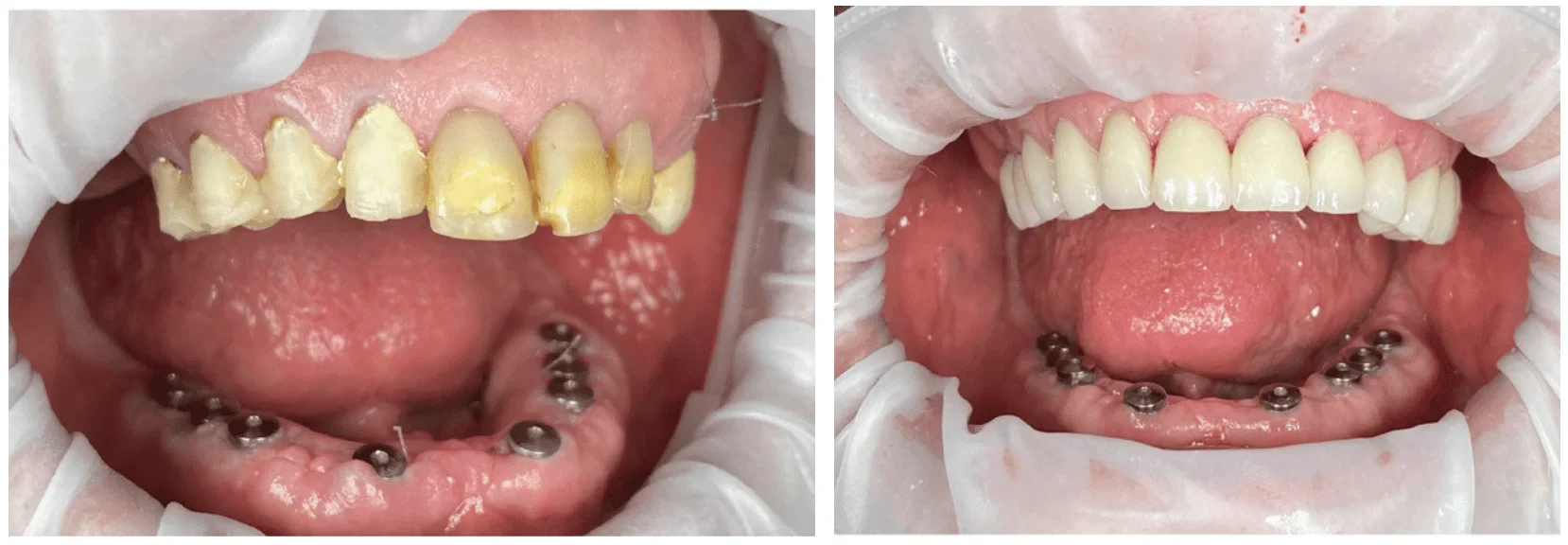
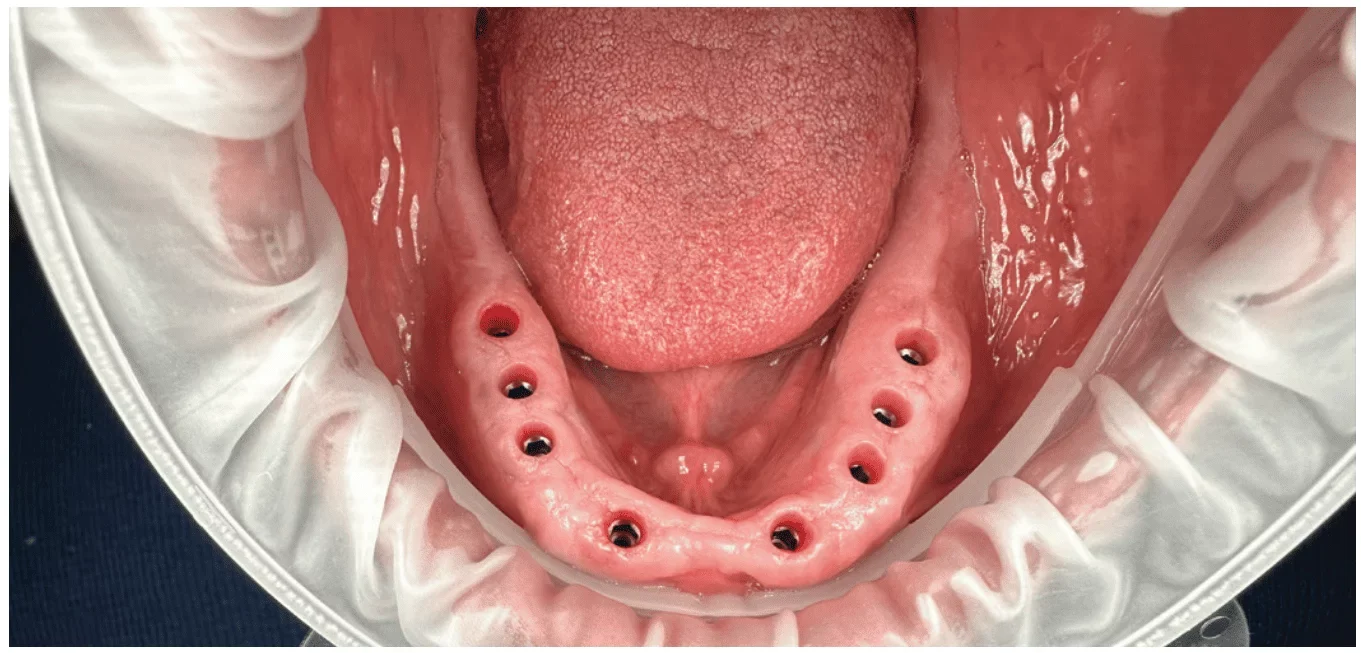
- Place eight dental implants in the lower jaw to hold a full-arch fixed bridge, replacing the lower denture with teeth that don’t come out.
- Place three implants in the upper jaw for single implant crowns.
- Restore the upper teeth with crowns designed digitally around the patient’s own face and smile.
A 3D CBCT scan was used to map the bone and plan each implant position before surgery. As Dr. Gammas puts it in the article, the scan became part of the blueprint for the whole case.
Step 1: Implant surgery with Dr. Gammas
Dr. Gammas placed all of the implants. In the upper jaw, two implants went in on the same day the damaged teeth were removed (called immediate placement), which can save the patient a separate surgery. Bone graft material and a protective membrane were placed where needed to support healing.
In the lower jaw, the eight implants had to line up with each other and with the upper teeth so the final bridge would bite correctly. Dr. Gammas used the CBCT plan, careful measurements and repeated checks during the procedure to keep the spacing and angles right. Implant design was chosen for strong initial stability and healthy gum tissue around each implant.
Step 2: Designing the upper smile with Dr. Kotchinian
Dr. Kotchinian led the restoration of the upper teeth. His focus was esthetics first: how much tooth shows when the patient smiles, where the midline falls, the gum line, and how the smile fills the corners of the mouth. The patient asked for a natural look that wasn’t too “toothy,” which suited his age and features.
Here the digital workflow made a real difference. The dental lab combined the patient’s smile photos with scans of his prepared teeth using design software, so the new crowns could be designed around his face before anything was made. Dr. Kotchinian reviewed the design, sent feedback, and approved the final version. That meant fewer chair visits for the patient and no guessing on the day the crowns went in.
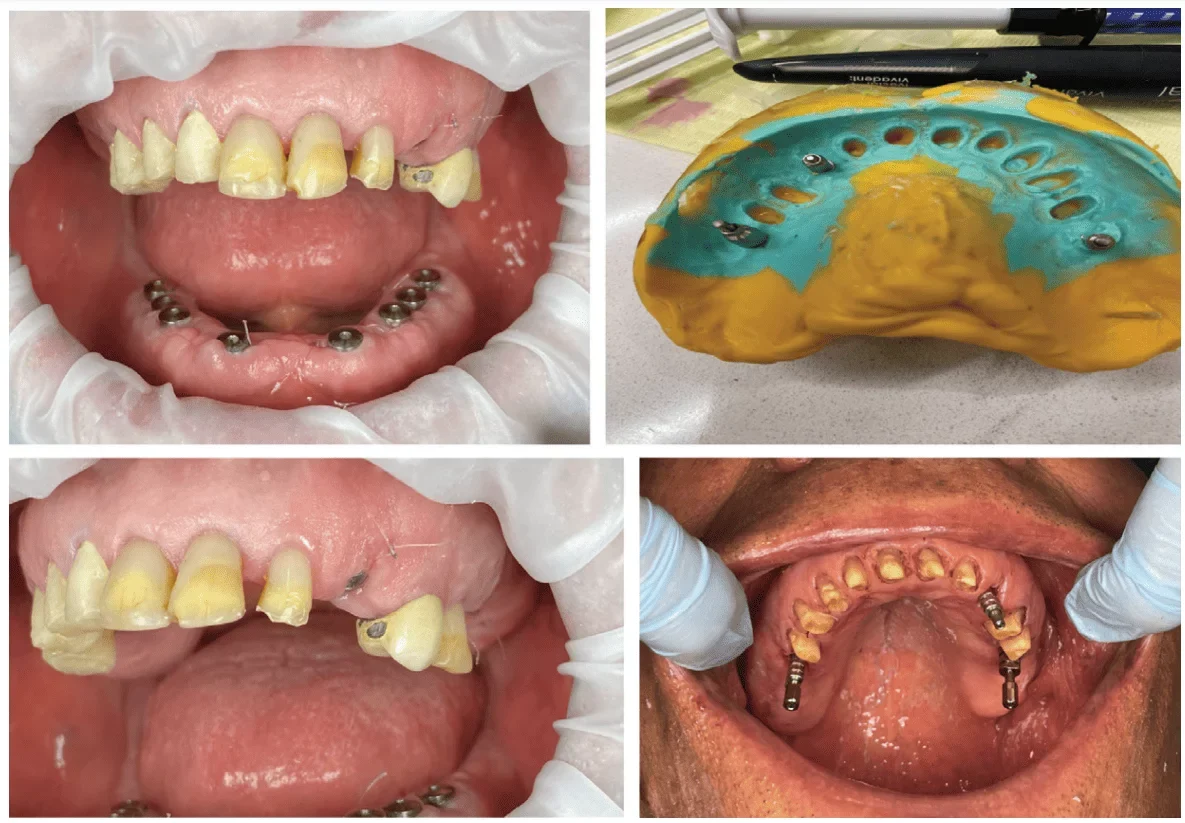
The crowns were made from porcelain fused to zirconia, a strong, metal-free option with a natural look that matched his less translucent natural teeth. The upper arch was restored about two months after surgery.
Step 3: The lower full-arch bridge
Dr. Gammas completed the lower jaw. The team made a try-in version first so fit, bite and appearance could be checked, then delivered a final zirconia full-arch bridge about four months after surgery. The patient was followed through healing, with adjustments made along the way.
The result
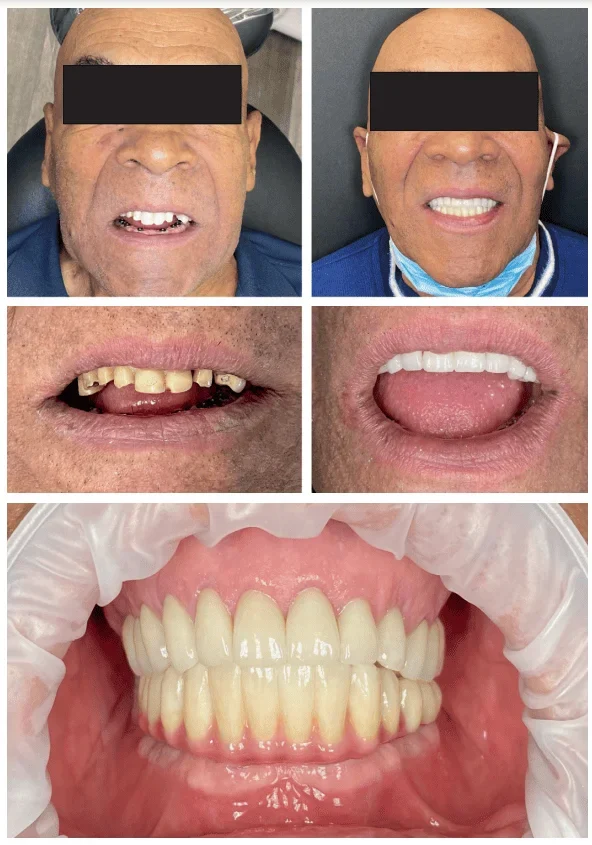
The patient got back what he had been missing: the ability to chew comfortably, speak clearly and smile with confidence. He reported that his new teeth felt comfortable and looked and worked like natural teeth. He left with home-care guidance and a schedule of follow-up visits to keep his implants and restorations healthy over the long term.
Why teamwork matters for full-arch cases
Full-mouth rehabilitation touches every part of dentistry: bone, gums, bite and appearance. When the surgeon and the restorative dentist plan together from day one, each implant is placed where the final teeth need it, and the final teeth are designed for the patient’s face rather than a generic template. Dr. Gammas and Dr. Kotchinian treat full-arch cases this way regularly at our Lowell office.
Missing several teeth, or tired of a denture that doesn’t fit? Request a consultation to talk through your options with our team. Every case is different, and your plan will be built around your own health, goals and smile.
References
- Gammas I, Kotchinian H. “Working as a team: Collaboration is key in the implant process.” Implant Practice US, Case Studies, November 30, 2023. https://implantpracticeus.com/working-as-a-team/
This article is an educational summary of a published clinical case. Results vary from patient to patient. Clinical photos and the full surgical and restorative details are available in the original article.
Written by
Dr. Iham Gammas, DMDBoard-Certified Implant Dentist & Founder, Lowell Family Dental Practice. Fellow & Master of ICOI and IADI. Associate Fellow of AAID.