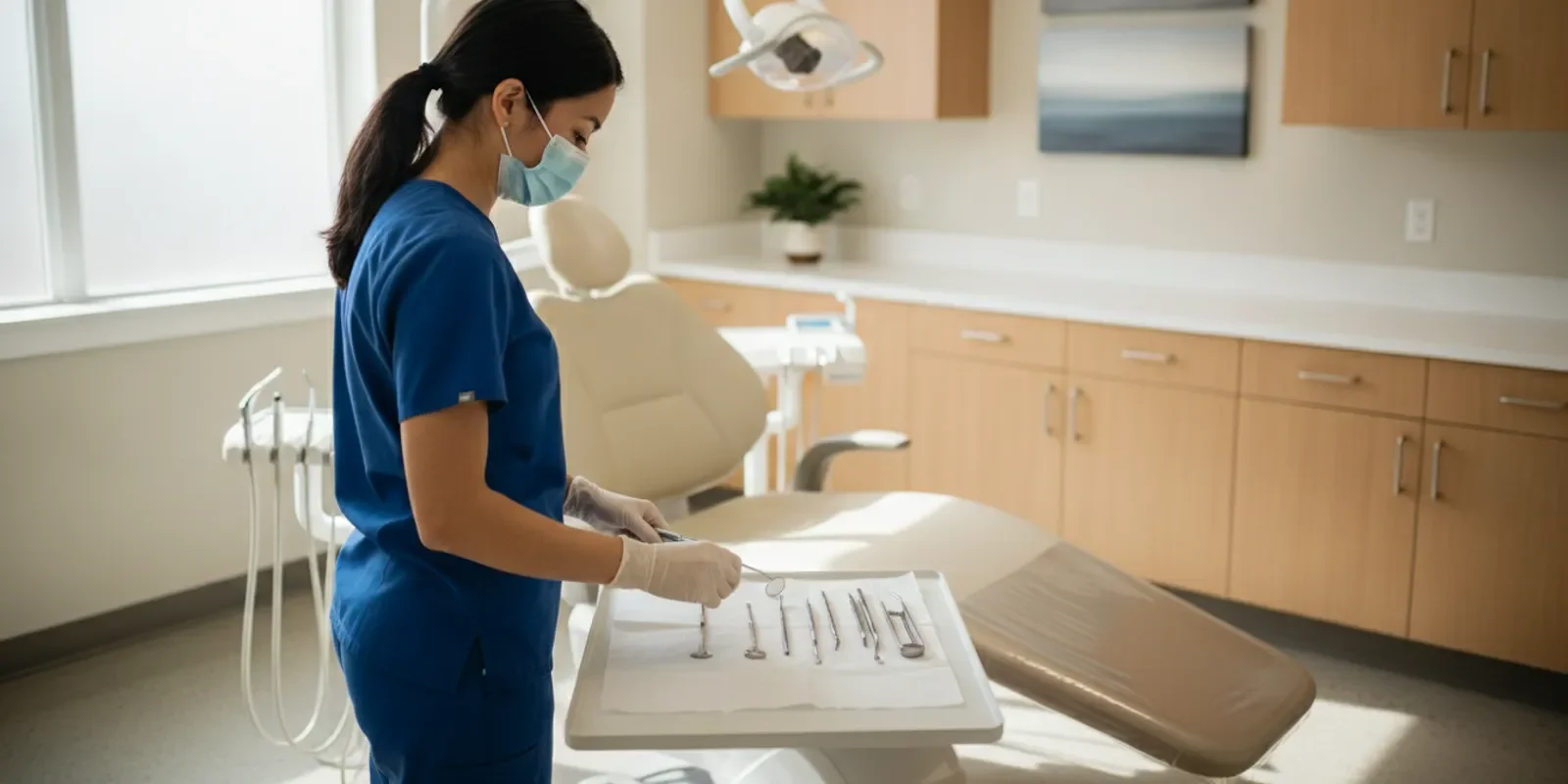
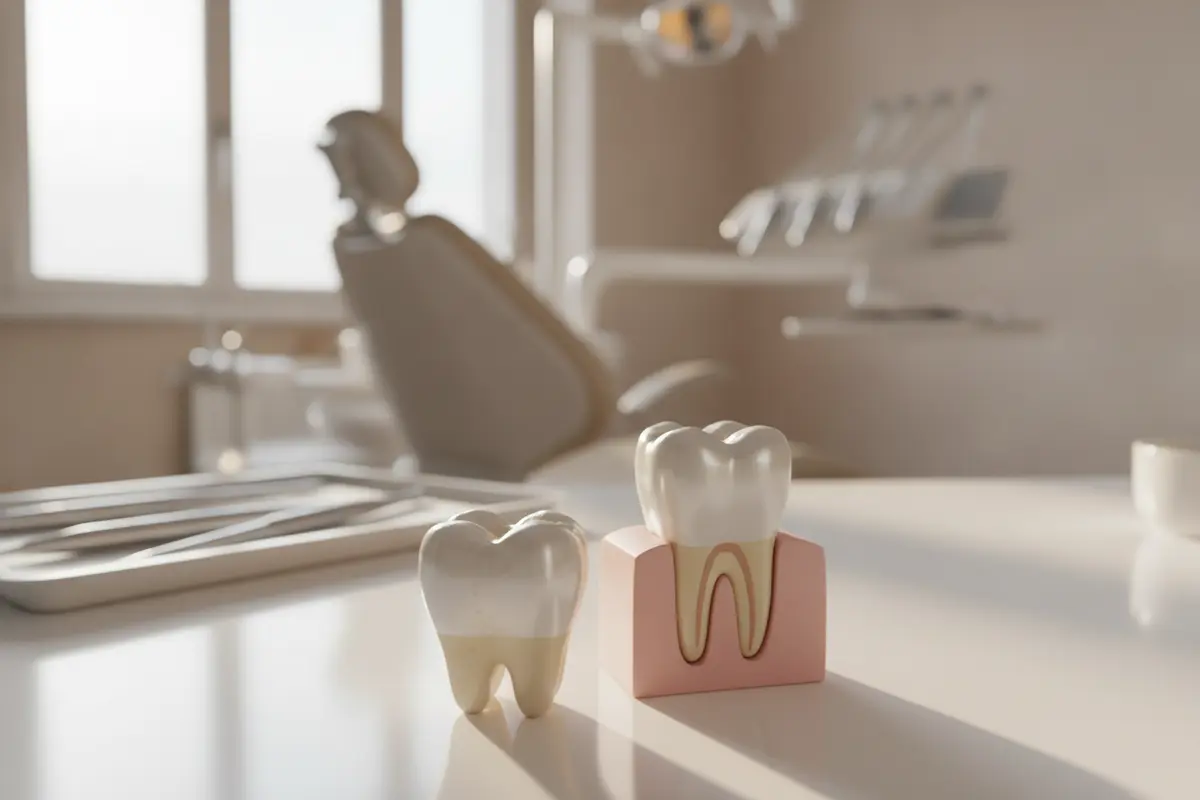
A tooth cap, also called a dental crown, can come loose while eating or brushing. If your tooth cap fell off, keep the crown, protect the exposed tooth, and contact a dentist for advice. Even when there is no pain, an examination can show whether the tooth needs attention and whether the crown can be used again.
Contact the office for dental guidance
What should you do first?
Take a moment to handle the situation carefully. The crown may look intact, but its fit and the condition of the tooth underneath cannot be judged reliably at home. These steps help you keep useful information and avoid unnecessary irritation while arranging care.
- Find the crown and store it safely. Pick it up, rinse it gently with clean water if it is dirty, and place it in a clean container with a lid. Do not scrub it, boil it, or use household cleaning products. Bring it to the appointment so the dentist can examine it.
- Notice what you feel without probing the tooth. Is it painful, sensitive to temperature, jagged, or visibly damaged? Note what you observe, but do not poke the area with a toothpick, fingernail, or tool. Avoid testing whether the crown can be pressed back into place.
- Call a dental office. Say when the crown came off, whether you still have it, and whether there is pain, swelling, bleeding, or sensitivity. Call Lowell Family Dental Practice at (978) 458-1179 or use the contact page to ask about next steps.
If the crown came off during a meal, check whether you can find it without putting yourself at risk. If it is missing, tell the office. If you are coughing or choking, or have trouble breathing, seek emergency medical care rather than searching for the crown. A dentist can advise you about the missing crown and the tooth based on your symptoms.
Try to remember what was happening just before it came loose. Was the food sticky or hard? Did you notice the crown moving earlier? Did it come away in one piece or appear broken? These details may help the dentist understand what to check, but they do not establish the cause by themselves.
How can you protect the tooth while you wait?
The exposed tooth may feel different from its crowned surface. You may notice sensitivity to air, pressure, temperature, or sweet foods. The amount of discomfort varies. Keep the area clean, but be gentle, and avoid using that tooth to bite or chew until a dentist gives you advice.
- Choose soft foods that need little chewing, and use the other side of your mouth if comfortable.
- Avoid hard foods such as ice, nuts, hard candy, and crusty bread near the exposed tooth.
- Skip sticky foods such as caramel, taffy, and chewing gum, which may pull at a loose dental piece or irritate the area.
- If hot or cold foods cause discomfort, choose foods closer to a comfortable temperature.
- Brush gently with a soft toothbrush. Keep the rest of your mouth clean, and do not force bristles into a tender spot.
- Do not bite directly into firm foods with the exposed tooth, even if it does not hurt at first.
For example, a soft meal eaten with the opposite side of the mouth is a more cautious choice than biting into an apple or chewing sticky candy. If food gets near the area, do not scrape at it with a sharp object. Rinse gently with water and ask the dental office how to proceed if it remains trapped or painful.
A rough edge can rub your tongue or cheek. Avoid filing, cutting, or bending anything. If the irritation is significant, describe it when you call and ask what to do until you are examined. The office can tailor guidance to your symptoms and timing.
Keep the crown outside your mouth in its container unless a dentist gives you specific instructions. A loose piece should not be left in place where it might move unexpectedly. If you are not sure whether a fragment is crown material or part of the tooth, do not pull it; explain what you see to the dental team.
Why shouldn’t you glue a crown back on at home?
Do not use superglue, craft adhesive, or household cement in your mouth. These products are not designed for oral use and may irritate tissues or complicate professional care. Do not place aspirin or other medicine directly against the tooth or gum.
Even a product sold as temporary dental cement is not suitable in every situation. The crown might be cracked, the tooth may need treatment, or the fit may have changed. Pressing it into place can cause discomfort or conceal a problem that needs assessment. A dentist may recommend a temporary measure in some cases, but the right choice depends on the tooth and crown. Call first, follow the instructions you receive, and never force the crown.
Trying an improvised repair can also make the next step less clear. Adhesive residue may need to be removed, and a crown that does not seat correctly can feel uncomfortable. Keeping the crown clean and bringing it in gives the dentist a chance to evaluate it without adding another substance to the situation.
A crown coming off does not necessarily mean the tooth is lost. The Cleveland Clinic overview of tooth loss describes several causes of tooth loss; it is not a diagnosis of why an individual crown came loose. An examination is needed to assess your tooth and decide what care is appropriate.
When should you seek urgent care?
Call a dentist promptly when a crown comes off, particularly if the tooth hurts, is very sensitive, has a sharp edge, or appears broken. Tell the office about pain, swelling, bleeding, and any change since the crown came away. Ask how soon you should be seen rather than deciding to wait based only on how the tooth looks.
Seek urgent dental guidance for worsening pain, swelling, bleeding that does not stop, or a broken tooth. Facial swelling together with trouble breathing or swallowing requires emergency medical care. If you swallowed the crown, contact a health professional for advice. Choking, coughing that does not settle, or difficulty breathing is an emergency.
Do not wait for severe pain before calling. A crown can come off with little or no discomfort, while the tooth may still need assessment. If you cannot reach your usual dental office, contact an urgent dental service for direction. Lowell Family Dental Practice can also be reached at (978) 458-1179.
When you call, be direct: “My crown came off today, and I have [describe symptom]. I have the crown / I cannot find it. How soon should I be seen, and what should I do until then?” This gives the office a useful starting point without requiring you to diagnose the problem yourself.
What may happen at the dental visit?
The dentist will ask when the crown came off and what symptoms you have noticed. The dentist can inspect the crown and the exposed tooth, and may need to assess the fit and look for damage or other concerns. Depending on the findings, options may include cleaning and recementing the crown, repairing or replacing it, or treating the tooth before deciding what restoration is suitable.
There is no single outcome that applies to every loose crown. The condition of both the crown and the tooth matters. A crown that looks whole may not fit the same way, while a tooth that feels comfortable may still need an examination. The table below outlines possible discussion points, not a prediction of what will be recommended in your case.
Crown and tooth appear suitable
Possible discussion: Whether recementing is appropriate
Why the finding matters: The dentist must assess fit and tooth condition
Crown is cracked or no longer fits
Possible discussion: Repair or replacement options
Why the finding matters: A damaged or poorly fitting crown may not protect the tooth as intended
Tooth has decay, a crack, or other damage
Possible discussion: Assessing and treating the tooth first
Why the finding matters: Covering an untreated problem may not address it
The tooth needs a different restorative plan
Possible discussion: Reviewing suitable options
Why the finding matters: Recommendations depend on examination findings
Bring the crown in its container. Be ready to share when it came off, what you were eating or doing, whether you had noticed movement before, and whether you have pain, swelling, bleeding, or sensitivity. If you take regular medicines or have relevant health concerns, mention them when asked. You do not need to know why the crown came off before making the appointment.
It may help to write down your main questions in advance. You could ask whether the tooth needs protection before the next visit, whether the crown appears reusable, what symptoms should prompt another call, and what care to follow at home. The dentist can explain which answers apply after examining you.
If you want to read about the practice’s restorative services before your visit, see its page about dental crowns. For information about the practice and its location, visit the office information page. You can also review the dentist information and new patient information if you are preparing for a first visit.
A crown is one way to restore a tooth, but a dentist needs to assess whether it remains appropriate after a tooth cap fell off. The practice’s information on dental implants describes another restorative service; it should not be read as a recommendation that an implant is needed. Ask about options only after the tooth has been examined.
How can you make the next few hours easier?
When a crown comes off outside regular routines, it can be hard to decide what to do first. Use a short plan: store the crown, call for guidance, keep chewing away from the tooth, and note any changes. This makes the situation more manageable while leaving diagnosis and treatment decisions to the dentist.
If it happens at work or school
Put the crown in a clean, secure container rather than wrapping it loosely in a tissue that might be discarded. Tell the dental office if you cannot come immediately and ask whether the timing or symptoms call for faster attention. Avoid snacks that are hard, sticky, or require biting with the affected tooth.
If it happens while traveling
Keep the crown in a protected container and contact a dental office for advice, especially if pain or swelling develops. Do not try to repair it in a hotel or with items from a first-aid kit. If travel prevents a prompt visit, ask a dental professional how to manage the exposed tooth until you can be assessed.
If you are caring for a child or another family member
Help them avoid chewing on the affected side and keep the crown somewhere safe. Ask what they feel without repeatedly pressing or examining the tooth. If they have trouble describing symptoms, note visible swelling, bleeding, or changes in eating and call the dental office for guidance.
These scenarios do not change the core advice: a phone call can help clarify the next step, while an in-person evaluation determines what is happening. If symptoms escalate, report the change rather than relying on an earlier plan.
Ask about arranging a dental visit
Frequently asked questions
Can I leave the crown off if it does not hurt?
Do not assume that no pain means no problem. Call a dentist, describe what happened, and ask how soon to come in. Keep the crown safe and avoid chewing on that side in the meantime.
Should I put the crown in my mouth to keep it safe?
No. Store it in a clean container instead. A loose crown may move unexpectedly, so do not leave it in place without professional advice.
What if I swallowed the crown?
Contact a health professional for advice, particularly if you have discomfort or are unsure what happened. Choking or difficulty breathing needs emergency care.
Can the dentist reuse the same crown?
Sometimes, but not always. The dentist needs to check whether it is intact, fits properly, and is appropriate for the condition of the tooth.
What should I tell the office when I call?
Share when the crown came off, whether you have it, and any pain, swelling, bleeding, or sensitivity. Ask how soon you should be seen and what to do before then.
Get guidance for your next visit
If a crown has come off, save it, protect the exposed tooth, and call for an assessment instead of trying to fix it with household products. To contact Lowell Family Dental Practice, call (978) 458-1179 or send a message online.
Written by
Dr. Iham Gammas, DMDBoard-Certified Implant Dentist & Founder, Lowell Family Dental Practice. Fellow & Master of ICOI and IADI. Associate Fellow of AAID.