Dentures vs Implants: A Lowell Patient Guide
If you are comparing dentures vs implants, the right choice depends on more than appearance. Dentures are removable appliances that replace several or all missing teeth. Dental implants are fixtures placed in the jawbone and restored with crowns, bridges, or an implant-supported denture. Your oral health, treatment timeline, daily routine, and budget all shape the decision.
To explore treatment options, visit our dental implant service page.
Schedule a tooth replacement consultation with Lowell Family Dental Practice to compare options for your smile.
This guide explains the practical differences without assuming that one treatment is right for everyone. A dentist must examine your gums, remaining teeth, bite, and jawbone before recommending a plan.
Dentures vs implants at a glance
In brief: Dentures offer a non-surgical, removable way to replace missing teeth. Implants require surgery and healing, but they provide a stable foundation that functions more like natural tooth roots.
| Factor | Dentures | Dental implants |
|---|---|---|
| How they work | Removable teeth supported by the gums | Fixtures in the jaw support a crown, bridge, or denture |
| Surgery | Usually not required | Required for implant placement |
| Daily removal | Usually removed for cleaning and overnight rest | Fixed restorations stay in place; removable implant dentures vary |
| Stability | May shift as the jaw and fit change | Designed to remain stable after integration and restoration |
| Treatment time | Often shorter | Usually longer because healing is required |
| Maintenance | Clean the appliance and gums daily | Brush, clean between restorations, and maintain professional visits |
| Future needs | May need relining, adjustment, or replacement | Implant and restoration health must be monitored long term |
A complete denture can replace all teeth in an arch. A partial denture fills gaps while using remaining teeth for support. Implant treatment is also flexible: it may replace one tooth, support a bridge, or secure a denture. Patients can learn more about the practice’s denture treatment and dental implant options before an exam.
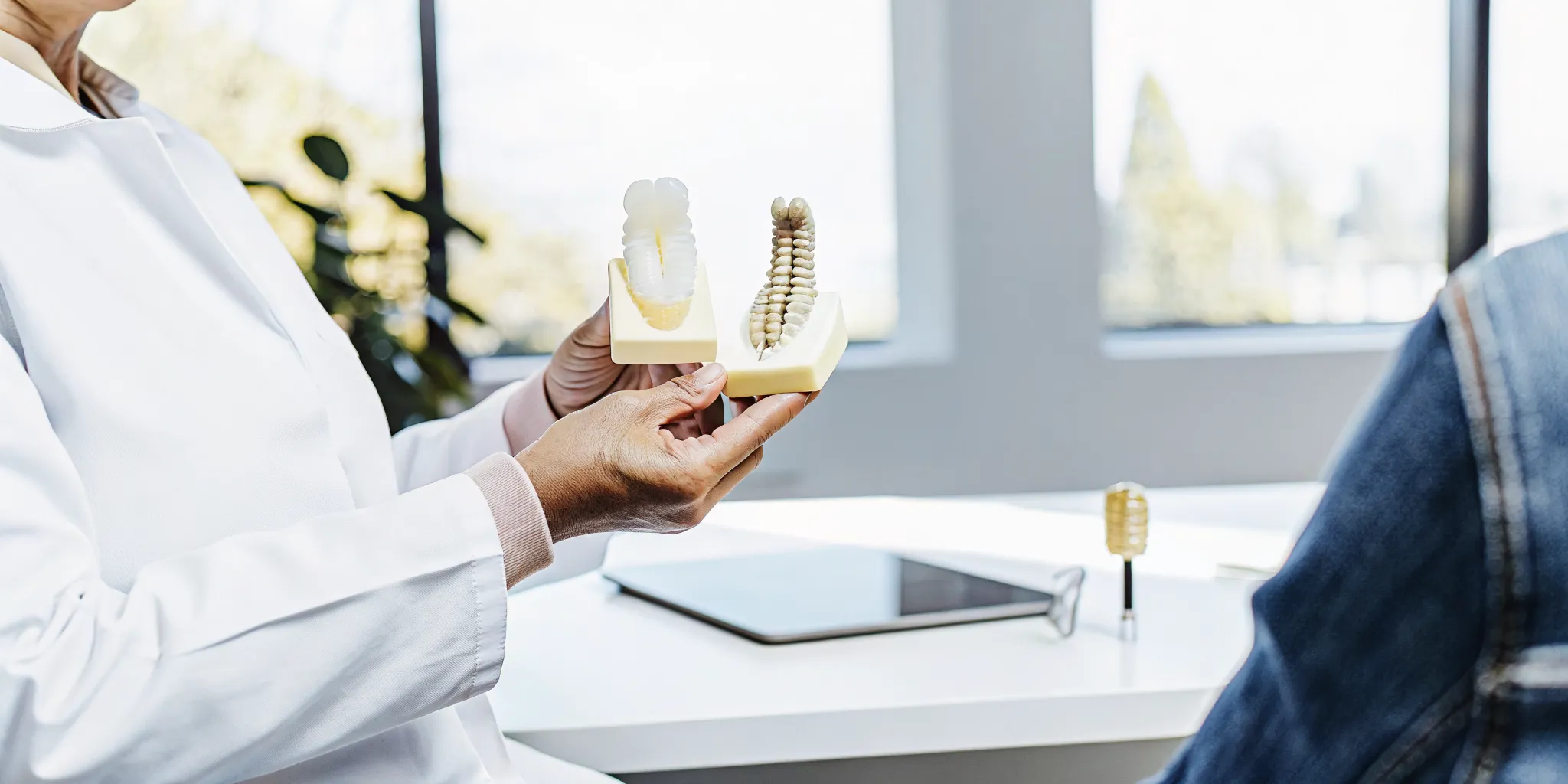
How do dentures and implants feel day to day?
The main daily difference is stability: a well-fitting denture rests on oral tissues, while an implant-supported restoration transfers chewing forces through implants anchored in the jaw.
Eating and speaking
New dentures often require an adjustment period. Patients may begin with softer foods, take smaller bites, and practice speaking while the tongue and facial muscles adapt. Adhesive may improve confidence for some patients, but it does not correct a denture that no longer fits.
Implant-supported teeth generally feel steadier during chewing. However, implants do not have the same periodontal ligament as natural teeth, so sensation is not identical. The number and position of implants, the restoration design, and the condition of the opposing teeth all affect function.
Comfort and fit
Denture fit can change because the jaw ridge naturally remodels after teeth are lost. A sore spot, looseness, or repeated slipping deserves an evaluation rather than a do-it-yourself adjustment. Implants may help stabilize a denture, but the surrounding gums still need careful monitoring.
For a third option, a conventional dental bridge may replace one or more adjacent teeth when suitable supporting teeth are present.
Who may be a candidate for dental implants?
A good implant candidate has healthy enough gums and bone to support treatment, along with health and habits that allow predictable healing. An implant consultation evaluates the whole mouth, not just the empty space.
Bone, gums, and remaining teeth
Implants need adequate bone volume and healthy surrounding tissue. Clinical examination and appropriate imaging help the dentist assess the site. Bone grafting may be discussed when the available bone is insufficient, which can add treatment time and cost. Active periodontal disease should be controlled because inflammation around an implant can threaten its support.
Health and healing factors
Medical history, medications, smoking, grinding, and ability to maintain oral hygiene can influence the plan. Some conditions do not automatically rule out implants, but they may change timing or risk. The American Dental Association notes that implant success depends on careful assessment, diligent oral hygiene, and regular dental visits.
Implants typically need a healing period before the final restoration is placed. Published long-term reviews report high implant survival, but survival is not the same as freedom from complications. Restorations can wear, screws can loosen, and tissue around an implant can become inflamed. This is why personalized risk assessment matters more than a single success-rate claim.
Who may prefer dentures?
Dentures may suit patients who want a removable, non-surgical replacement or who are not ready for implant treatment. They can restore appearance and basic function after extensive tooth loss.
A denture may be considered when:
- Several or all teeth in an arch need replacement.
- The patient prefers to avoid implant surgery.
- A shorter initial treatment path is important.
- Health, bone, or budget factors make implants less suitable.
- A temporary replacement is needed while a longer-term plan is considered.
Dentures still require professional care. Changes in fit can affect chewing and irritate tissues. Regular exams allow the dentist to check the gums, oral tissues, bite, and appliance. The practice’s guide to denture care explains the daily routine in more detail.
What does the treatment timeline involve?
Denture treatment is often completed sooner, while implant treatment includes surgical healing before the final restoration. The actual timeline depends on oral health and the treatment design.
Denture appointments
A denture plan may involve preliminary impressions or scans, bite measurements, a trial setup, delivery, and follow-up adjustments. If teeth must be removed, an immediate denture may sometimes be placed on the same day. As tissues heal, its fit can change, so adjustments or a reline may be needed. The American Dental Association’s denture overview also emphasizes cleaning the appliance and continuing regular dental visits.
Implant appointments
An implant plan usually begins with an exam and imaging. After placement, the implant is allowed to integrate with the surrounding bone before it supports the final tooth or teeth. A temporary restoration may be possible in selected cases, but immediate placement or loading is not appropriate for every patient. If grafting is needed, another healing stage may be added.
Before deciding, ask what you will wear during healing, when normal eating can resume, and which symptoms require a call. A clear timeline makes it easier to plan around work, transportation, and follow-up visits.
How should you compare cost and long-term value?
Compare total treatment needs, not only the initial fee. Dentures usually have a lower upfront cost, while implant treatment commonly involves surgery, components, and a restoration. Exact fees depend on the number of teeth replaced and the complexity of care.
Ask for a written treatment plan that separates likely phases and explains alternatives. Useful questions include:
- Does the plan include extractions, imaging, grafting, temporary teeth, and the final restoration?
- How many appointments and healing stages are expected?
- What maintenance or future replacement should I anticipate?
- Which parts may be eligible for dental insurance benefits?
- What happens if an appliance needs adjustment or a restoration needs repair?
A removable denture may need periodic relining or replacement as the mouth changes. An implant can remain functional for many years, but the crown, bridge, or denture attached to it may need maintenance. Because every case is different, Lowell Family Dental Practice can explain options after an exam rather than quoting a one-size-fits-all figure online.
Request an appointment to review a personalized tooth replacement plan.
What is the middle ground between dentures and implants?
An implant-supported denture combines a removable or fixed full-arch restoration with implants for added support. It can offer more stability than a conventional denture without replacing every missing tooth with a separate implant.
The design varies. Some implant-supported dentures snap onto attachments and can be removed for cleaning. Other full-arch restorations are fixed and removed only by a dental professional. The appropriate design depends on bone, anatomy, hygiene access, bite forces, and treatment goals.
This option is not maintenance-free. Attachments can wear, the denture may need service, and the tissues around implants must stay clean. Patients should understand exactly how to clean beneath the restoration before choosing it.
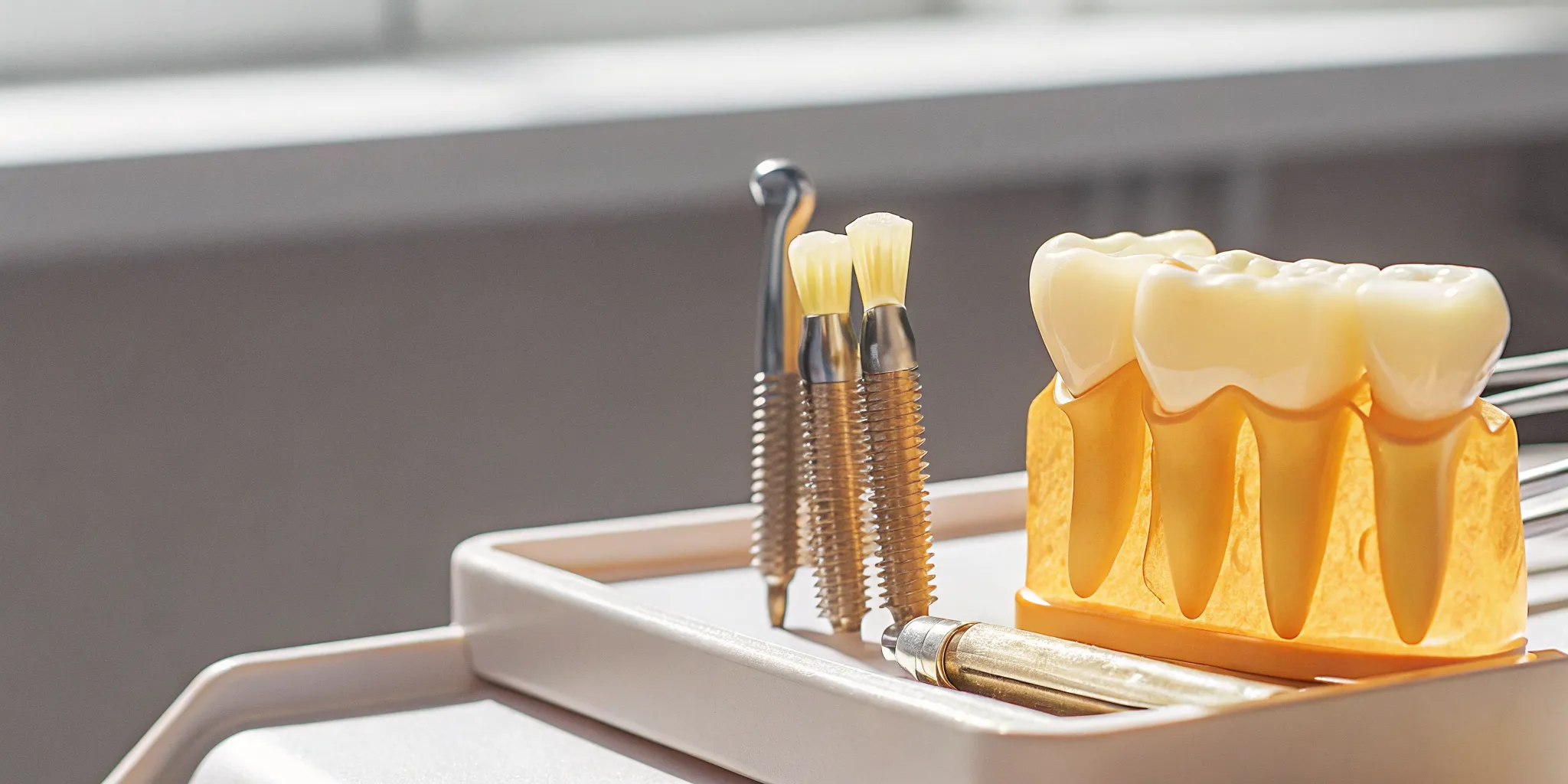
How to choose between dentures vs implants
The best choice is the option that safely fits your health, priorities, and ability to maintain it. A structured consultation makes the tradeoffs easier to compare.
- Define the problem. Identify how many teeth need replacement and whether any remaining teeth can be preserved.
- Assess oral health. Evaluate gums, bone, bite, existing restorations, and any sources of infection.
- Review medical factors. Discuss medications, healing risks, smoking, grinding, and relevant health conditions.
- Compare the full timeline. Ask about surgery, healing, temporary teeth, adjustments, and final restoration delivery.
- Plan for maintenance. Choose a restoration you can clean consistently and have checked regularly.
Patients with a history of gum concerns can also review what happens during periodontal exams. These evaluations are important because healthy supporting tissues matter for both dentures and implants.
Daily care and follow-up
Neither option is set-and-forget. Consistent home care and professional follow-up protect comfort, oral tissues, and the investment in treatment.
Caring for dentures
- Remove and clean the denture as directed.
- Clean the gums, tongue, and any remaining teeth every day.
- Use products intended for dentures, not abrasive household cleaners.
- Store the appliance safely when it is out of the mouth.
- Schedule an exam if it becomes loose, painful, cracked, or difficult to use.
Caring for implants
- Brush carefully around the restoration and gumline.
- Use the recommended floss, interdental brush, or other cleaning aid.
- Attend professional maintenance visits at the advised interval.
- Report bleeding, swelling, discomfort, looseness, or a bite change promptly.
Good follow-up can identify problems before they become larger. Never attempt to reshape a denture or tighten an implant component at home.
Frequently asked questions
Can I switch from dentures to implants later?
Often, yes. The dentist must evaluate your health, gums, and available bone first. Bone changes after tooth loss may affect whether grafting or another preparatory step is recommended.
Do implants prevent all jawbone changes?
Implants transmit force into the surrounding bone and may help preserve bone near the implant sites. They do not stop every age-related or health-related change throughout the jaw.
How long does implant treatment take?
Timing varies with the number of implants, healing, grafting needs, and restoration design. Treatment often spans several months because the implant needs time to integrate before final restoration.
Do dentures need to be replaced?
Yes, dentures can need relining, adjustment, or replacement as the mouth and appliance change. A professional exam determines whether an adjustment is enough or a new denture is appropriate.
Are implant-supported dentures removable?
Some are removable by the patient and others are fixed in place. Your dentist should explain cleaning, maintenance, and professional service requirements for the specific design.
Compare your options with a Lowell dentist
Dentures, implants, bridges, and implant-supported dentures each solve different problems. The most useful next step is an exam that considers your mouth, medical history, priorities, and timeline.
Contact Lowell Family Dental Practice to schedule your tooth replacement consultation or call (978) 458-1179.
Written by
Dr. Iham Gammas, DMDBoard-Certified Implant Dentist & Founder, Lowell Family Dental Practice. Fellow & Master of ICOI and IADI. Associate Fellow of AAID.