Missing teeth can affect more than your smile. They can make chewing, speaking, and everyday social moments feel less comfortable. If you are comparing dental implants vs dentures, you may be weighing a fixed restoration against a removable option, as well as differences in cost, treatment time, care, and long-term support for your mouth.
The best choice between dental implants and dentures depends on your oral health, goals, and long-term needs. A thoughtful comparison can help you bring the right questions to a consultation instead of choosing based on a single benefit or an online price estimate.
Dental implants vs dentures at a glance
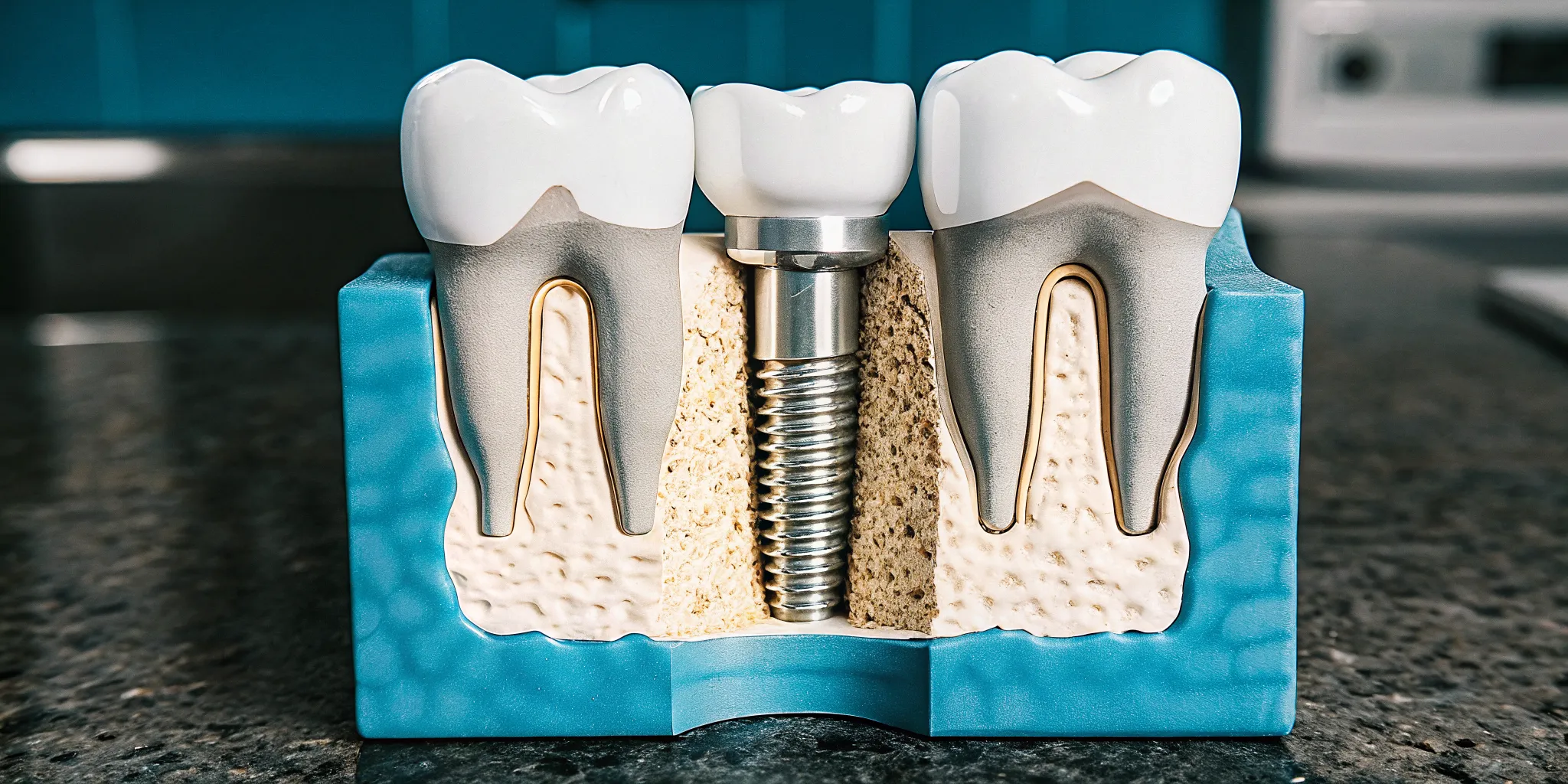
Dental implants and dentures can both restore missing teeth, but they support a smile in different ways. Implants replace the tooth root with a biocompatible post and hold a crown, bridge, or implant-supported denture. Dentures replace the visible teeth with a removable appliance that rests on the gums or attaches to remaining teeth.
- Dental implants: A fixed tooth replacement that is anchored in the jaw after the implant integrates with bone. Implants can replace one tooth, several teeth, or support a full-arch restoration such as an All-on-X treatment when appropriate.
- Traditional dentures: Removable full or partial appliances that replace several or all visible teeth. They can often be delivered without implant surgery and may be a practical option when health, anatomy, timing, or budget makes surgery unsuitable.
- Implant-supported dentures: A middle-ground option that uses implants to help stabilize a removable denture. The appliance is still taken out for cleaning, but it may move less than a traditional denture.
Neither option is automatically right for every patient. The best recommendation depends on the condition of your gums and jawbone, your general health, the number of teeth being replaced, and the kind of daily function you want to regain.
What are dental implants and how do they work?
A dental implant is a small post, commonly made from titanium, that is placed in the jaw where a tooth root used to be. After a healing period, the post can support an abutment and a custom crown. For multiple missing teeth, implants may support a bridge or a full-arch restoration rather than one crown per tooth.
The process of bone integration, called osseointegration, gives an implant its foundation. The implant does not simply sit on top of the gums. Once healing is complete, it can provide a stable base for a restoration that is designed around your bite, smile, and oral anatomy.
Because an implant-supported restoration is fixed in place, many patients appreciate the feeling of stability during meals and conversation. Implants also deliver stimulation to the jaw in the area where the post is placed. They do not reverse every effect of tooth loss, and they cannot guarantee that bone loss will stop everywhere, but they can help maintain bone support around the implant site when healing and hygiene are successful.
What are dentures and how do they work?
Traditional dentures are removable appliances that replace a group of missing teeth. A full denture replaces the teeth in an upper or lower arch, while a partial denture fills gaps when some natural teeth remain. The base is shaped to fit the mouth, and the replacement teeth are arranged to support appearance, speech, and chewing.
Modern dentures can look natural and provide meaningful improvement when teeth are missing. They are also less invasive than implant treatment because they do not require a post to be placed in the jaw. A denture may be the better starting point for a patient who needs teeth replaced quickly, is not ready for surgery, has limited bone support, or needs to work within a specific budget.
Over time, the shape of the gums and jaw can change after tooth loss. A denture may then need an adjustment, reline, repair, or replacement to restore its fit. Denture adhesive can help some patients, but it should not be used to conceal a denture that no longer fits safely or comfortably. Your dentist can assess the fit and recommend the appropriate adjustment.
Key differences between dental implants and dentures
Function, stability, and comfort
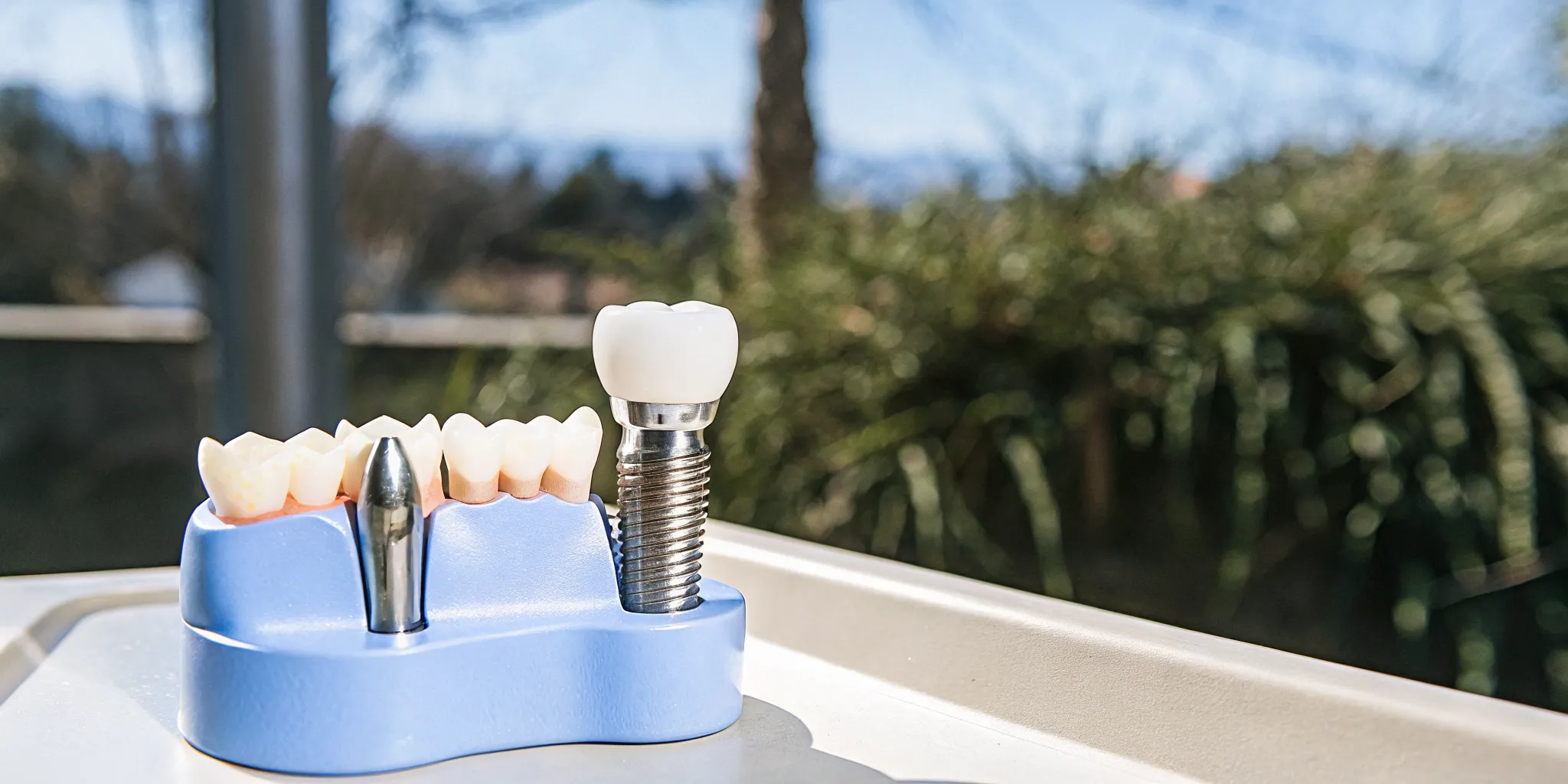
Implants are anchored to the jaw, so the restoration is less likely to shift during chewing or speaking when it has healed properly and the bite is well planned. Many patients describe that stability as the closest available experience to having a fixed tooth replacement. The restoration still requires normal dental care, and an implant is not the same as a natural tooth, but it does not need to be removed during the day.
Traditional dentures rest on soft tissue and use the shape of the mouth, suction, clasps, or adhesive for support. They can improve chewing and speech, but they may move during meals, especially if the fit changes. An implant-supported denture can reduce movement while preserving the ability to remove the appliance for cleaning. Comfort varies with the appliance design, fit, anatomy, and the time needed to adapt.
Daily maintenance
Implant crowns and bridges are cleaned in the mouth. You brush them and clean around the gumline, then use the floss threader, interdental brush, water flosser, or other tool your dental team recommends. Regular exams remain important because the gums around an implant can become inflamed, and the restoration or surrounding teeth still need professional care.
Traditional dentures should be removed and cleaned as directed, usually after meals or at least daily. They should not be scrubbed with abrasive household products or worn continuously unless your dentist specifically gives different instructions. The mouth also needs gentle cleaning, and the appliance should be stored as directed when it is out. Partial dentures require extra attention around the natural teeth that support them.
Candidacy and health considerations
Implant candidacy is evaluated rather than assumed. Your dentist may review your gums, remaining teeth, jawbone volume, bite, medical history, medications, tobacco use, and ability to maintain daily hygiene. Some patients need periodontal treatment, tooth removal, bone grafting, or a period of healing before an implant can be placed. Conditions that affect healing do not always rule out implants, but they may change the timing or require coordination with your physician.
Because dentures do not require implant surgery, they can serve patients for whom an implant procedure is not advisable or not desired. Dentures are not a lesser form of care. They may be the safest and most practical option for someone with significant health limitations, insufficient bone support, a need for faster replacement, or a preference for a removable solution.
For patients missing all or most teeth, an All-on-X full-arch plan may be discussed when the anatomy and health evaluation support it. The number and position of implants, the temporary restoration, and the final prosthesis are individualized. A consultation with a qualified implant provider is the only reliable way to determine whether that approach is appropriate.
Treatment timeline
Traditional dentures can often be planned and delivered more quickly than implants, particularly when the goal is to provide a removable replacement soon after extractions. Healing, impressions, adjustments, and denture fabrication still take time, and a new denture may require follow-up visits as you learn to speak and chew with it.
Implant treatment usually takes longer because the jaw needs time to heal around the implant before the final restoration is attached. Some patients receive a temporary tooth or provisional appliance while treatment progresses. The overall timeline can be affected by extractions, bone grafting, gum treatment, medical factors, and the number of teeth being replaced. A longer timeline can be a tradeoff for a fixed, bone-anchored result, but it should be weighed against your priorities and not treated as a promise of a particular outcome.
Tradeoffs and long-term planning
Implants generally involve a higher initial investment and a surgical procedure. They can provide excellent stability, but they require healing, careful hygiene, regular maintenance, and a commitment to follow-up care. An implant can develop complications, and the crown, bridge, or denture attached to it may eventually need repair or replacement. Discuss the risks, alternatives, and maintenance plan before treatment begins.
Dentures usually have a lower upfront cost and avoid implant surgery, but they may need periodic adjustments or replacement as the mouth changes. Some foods may require more caution, and the appliance can feel less stable than a fixed restoration. The cost over time depends on the type of denture, repairs, relines, replacement schedule, insurance benefits, and the care your mouth needs. Ask for a written estimate that separates the appliance, extractions, diagnostics, follow-up visits, and any optional procedures.
How to choose between dental implants and dentures
Start by describing what you want your replacement teeth to do. Tell your dentist whether your priority is a fixed feel, a shorter initial timeline, a removable option, a particular budget, easier cleaning, or a more gradual treatment plan. Your recommendation should account for your health and anatomy as well as your preferences.
During a consultation, ask:
- How many teeth need to be replaced, and what condition are the remaining teeth and gums in?
- Do I have enough bone for implants, or would grafting or additional healing be recommended?
- What would the complete timeline include, from any extractions through the final restoration?
- How would I clean and maintain each option, and what follow-up visits would I need?
- What are the likely tradeoffs, risks, repair needs, and long-term costs of each plan?
- Would a fixed bridge, implant-supported denture, traditional denture, or All-on-X restoration better match my goals?
If you want a broader explanation of implant treatment and the questions to consider, read our complete guide to dental implants in Lowell, MA. Then bring your questions to a clinical evaluation with a qualified provider who can examine your mouth and explain which options are realistic for you.
Frequently Asked Questions
What is the cost difference between dental implants and dentures?
Traditional dentures generally cost less at the beginning because they do not involve implant surgery. Implants usually require more visits and may include extractions, grafting, temporary restorations, or a final crown, bridge, or full-arch prosthesis. The right comparison is the complete plan and expected maintenance, not only the first quoted fee. Ask your dental team for an itemized estimate and review what insurance or financing options may apply.
Which is better for older adults: dental implants or dentures?
Age alone does not decide between implants and dentures. An older adult who is healthy enough for surgery and can maintain careful hygiene may be a candidate for implants, while another patient may benefit from a removable denture because of medical factors, anatomy, timing, or personal preference. Your dentist can help weigh function, healing, dexterity, maintenance, and overall health.
What is the downside of dental implants?
Implants require surgery, a healing period, and a higher initial investment than traditional dentures. They can also require additional procedures when bone or gum support is limited. Even after successful treatment, the implant and its restoration need daily care and professional monitoring. A consultation should include the potential benefits, risks, alternatives, and what would happen if a complication occurred.
How do snap-in dentures compare with traditional dentures?
Snap-in dentures attach to dental implants and can be more stable than a traditional denture that rests directly on the gums. They are still removable, and the implants and appliance need to be cleaned as instructed. They may require fewer implants than a fixed full-arch restoration, but candidacy, maintenance, cost, and the final design vary from patient to patient.
How long does it take to get dental implants or dentures?
Many denture cases can be completed sooner than implant cases, but the actual schedule depends on extractions, healing, impressions, laboratory fabrication, and adjustments. Implant treatment commonly includes a healing period before the final restoration, and grafting or other preparation can extend the timeline. Your provider should give you a sequence of visits and explain when you can expect temporary and final teeth.
Call (978) 458-1179 to book a visit with Dr. Gammas and his team at Lowell Family Dental Practice.
Written by
Dr. Iham Gammas, DMDBoard-Certified Implant Dentist & Founder, Lowell Family Dental Practice. Fellow & Master of ICOI and IADI. Associate Fellow of AAID.