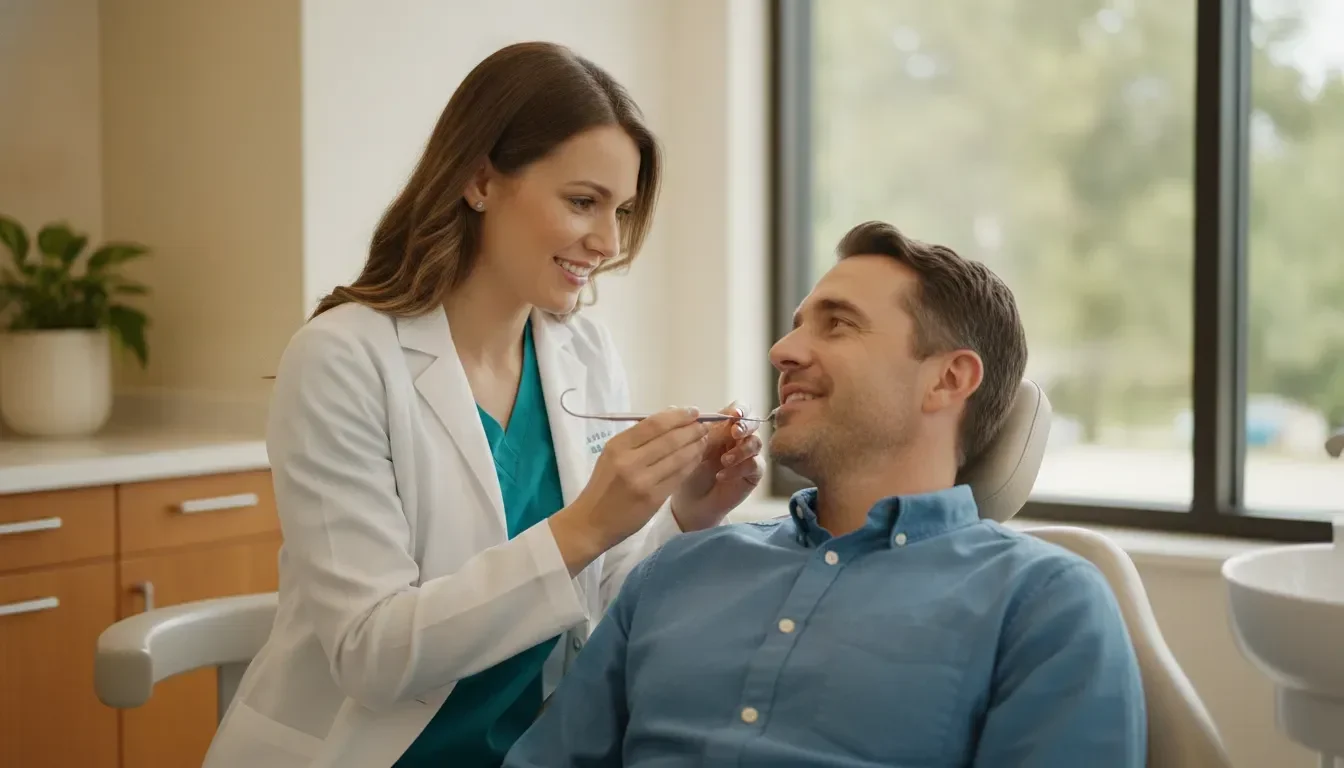
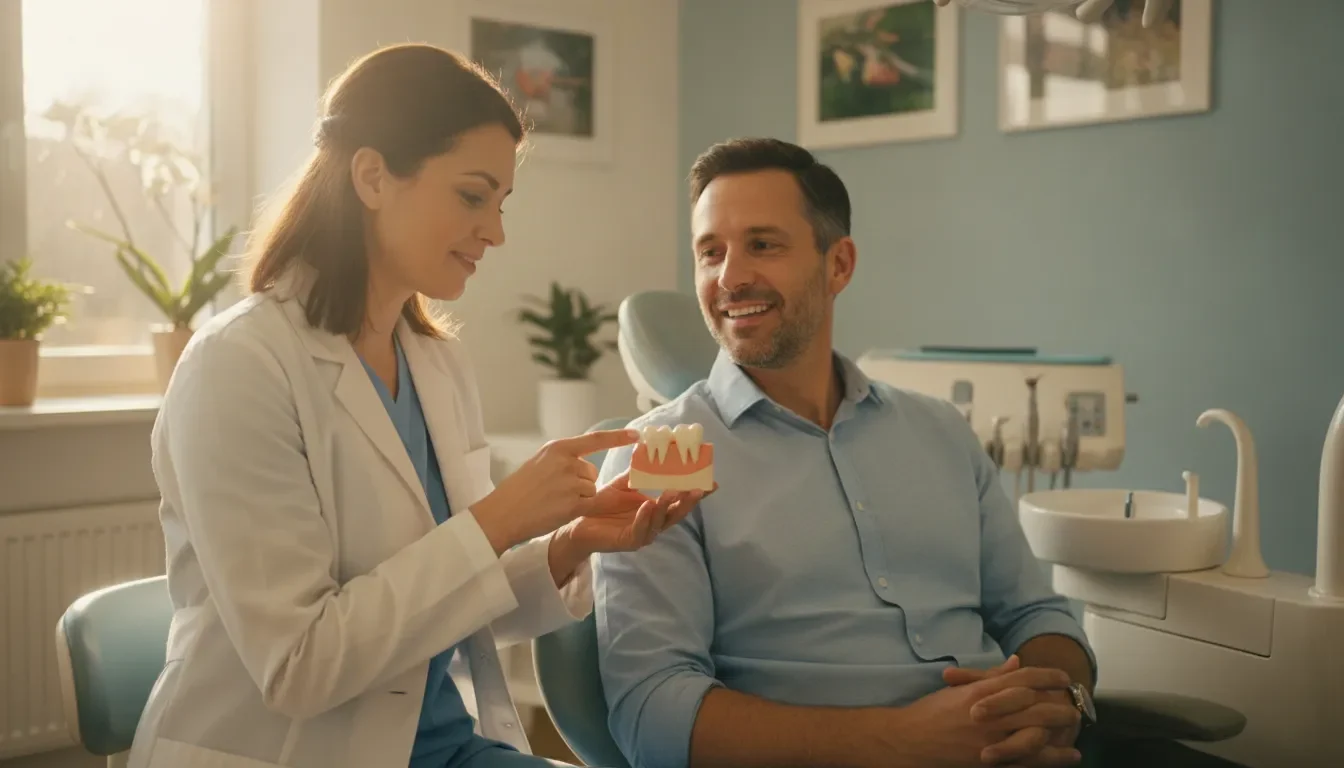
An oral cancer screening is a quick, painless examination of your mouth and throat that looks for unusual changes before they become more serious.
Seeing an oral cancer screening dentist during a routine dental visit can help identify early warning signs, especially when you attend regular preventive appointments.
During the exam, a dentist checks the tongue, gums, inner cheeks, roof and floor of the mouth. And the back of the throat for areas that look or feel abnormal. The screening usually takes only a few minutes and can fit naturally into a comprehensive checkup. It does not replace attention to symptoms, but it gives your dental team a useful baseline for noticing changes over time. If anything concerning appears, your dentist can explain the next step, which may include monitoring the area, additional testing, or referral to a specialist.
Not every patient has the same risk, and an annual screening schedule may depend on your age, tobacco or alcohol use, HPV exposure, symptoms, and overall health. Still, regular screenings are a simple part of routine preventive family dental care. Understanding what the exam involves makes it easier to decide how often to receive one and when to speak up about a change that does not go away.
Next, we will look more closely at what happens during an oral cancer screening and why this brief exam belongs in ongoing dental care.
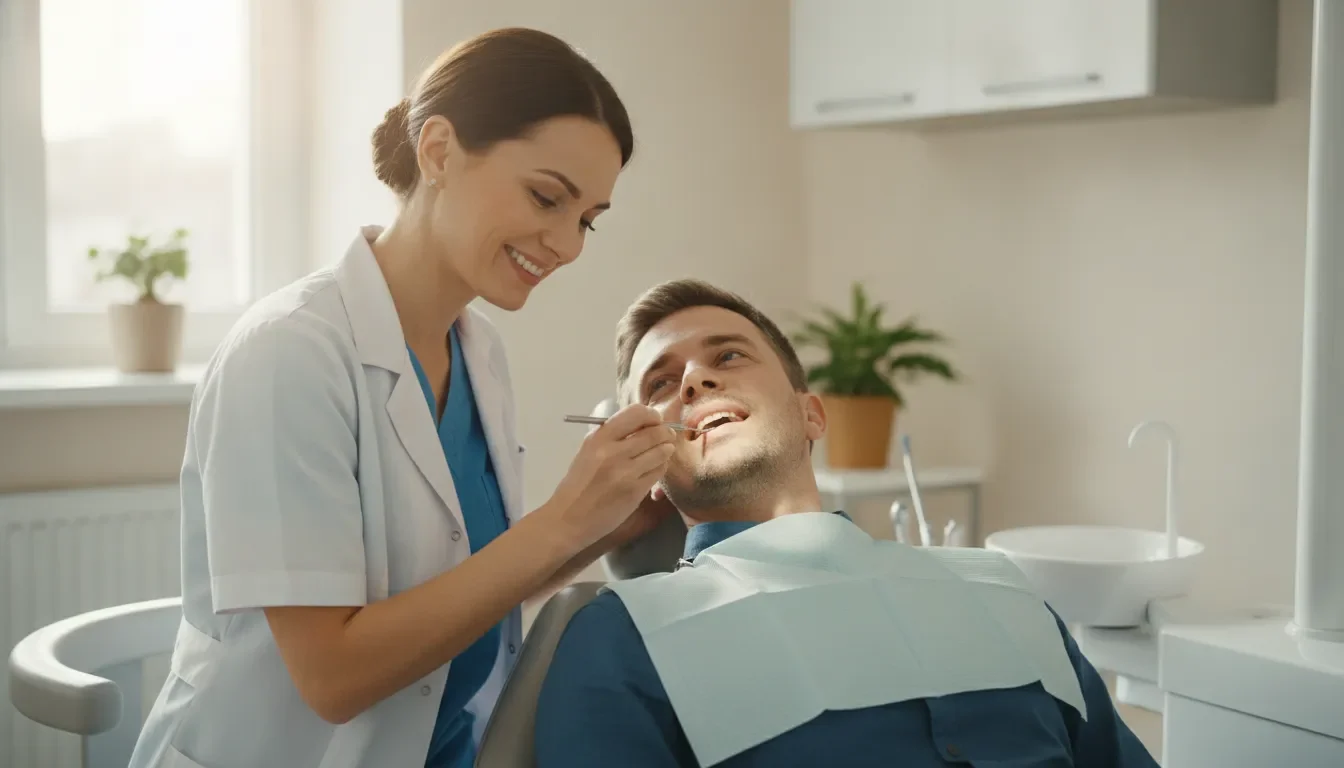
Book your oral cancer screening with Dr. Gammas and his team today, or call the practice at (978) 458-1179. A few painless minutes can give you peace of mind and a clear baseline for your oral health.
What Is an Oral Cancer Screening?
An oral cancer screening is a brief examination of your mouth, throat. And nearby tissues to look for early signs of cancer or changes that may need closer attention. Oral cancer includes cancers of the mouth and the back of the throat. These cancers can develop on the tongue, gums, the tissue lining the mouth. Beneath the tongue, at the base of the tongue, or toward the back of the mouth.
The goal is not to diagnose cancer during a routine dental visit. Instead, the screening helps your dentist notice unusual areas early and decide whether they should be monitored, tested, or evaluated by a specialist. Many changes are harmless, but identifying them promptly gives you a clearer path forward and avoids the stress of wondering whether something should be checked.
What happens during the screening?
Your dentist visually examines the inside of your mouth and feels the tissues around your jaw, neck. And throat for changes such as a sore, lump, swelling, or area that looks different from the surrounding tissue. The dentist may ask whether you have noticed discomfort, a change in your voice, difficulty swallowing, or a spot that has not healed. The exact steps can vary depending on your health history and what the dentist observes.
An oral cancer exam is painless and takes only a few minutes. There are no needles, incisions, or special preparation requirements for a routine screening. You simply open your mouth while the dentist uses good lighting and a careful examination technique. If anything looks unusual, your dentist can explain what was found and recommend additional testing or a referral when appropriate. A finding that needs follow-up does not automatically mean cancer. It means the area deserves responsible attention.
Why include it in a regular checkup?
A regular dental checkup is an excellent opportunity to have an oral cancer screening because the examination fits naturally into preventive care. You do not need to wait until you have pain or a noticeable problem. Keeping screenings part of your normal visits allows your dentist to compare changes over time while also checking your teeth, gums, bite, and overall oral health.
This preventive approach supports the connection between oral health and total body health. It also makes screening easier for every member of the family, including patients who may not know what changes to watch for at home. Alongside routine preventive family dental care, a quick screening can provide reassurance and help you act thoughtfully if follow-up is needed.
Simple answer: An oral cancer screening is a quick, painless check for unusual changes in the mouth and throat, usually completed during a regular dental appointment.
Who Should Get Regular Oral Cancer Screenings?
Everyone can benefit from an oral cancer screening, even when there are no obvious symptoms or known risk factors. A screening is a routine preventive check, not a prediction that cancer is present. It gives your dentist an opportunity to look for changes that may be difficult to notice at home and to recommend follow-up care when something needs closer attention.
Oral cancer accounts for roughly 3% of cancers diagnosed annually in the United States. The National Institute of Dental and Craniofacial Research reports about 54,000 new cases in 2022. Oral cancers occur most often in people over 40, but age alone should not determine whether you receive an exam. Regular screenings can be part of routine preventive family dental care for adults of every age.
Risk factors that make regular screening especially important
Your dentist may recommend paying particular attention to oral cancer screening if certain factors apply to you.
- Tobacco use: Cigarettes, cigars, smokeless tobacco, and other forms of tobacco increase oral cancer risk.
- Heavy alcohol use: Frequent heavy alcohol consumption is another established risk factor, and using tobacco and alcohol together can raise concern further.
- Age over 40: Oral cancers most often occur in this age group, making consistent dental visits especially valuable.
- HPV exposure: Infection with HPV type 16 is linked to some oral cancers. The incidence of HPV-positive oral cancer has risen in recent years.
- A history of missed dental care: Studies have found that fewer than 15% to 25% of regular dental patients report having received an oral cancer screening. If you are unsure whether you have had one, it is reasonable to ask at your next visit.
Having a risk factor does not mean you will develop oral cancer. Likewise, having no known risk factors does not make screening unnecessary. Some changes are painless and may not affect eating, speaking, or brushing in the early stages. A brief professional examination adds another layer of protection for your health.
Question and answer
Q: Do I need an oral cancer screening if I feel healthy?
A: Yes. Screenings are useful because early changes may not cause pain or noticeable symptoms. Your regular dental examination is a convenient time to ask whether an oral cancer screening is appropriate.
Q: Is screening only for older adults or tobacco users?
A: No. Adults over 40 and people who use tobacco or alcohol may have elevated risk, but everyone can benefit from routine screening. Your dentist can consider your age, health history, habits, and any changes you have noticed when discussing your care.
Q: What should I do if I notice a change between visits?
A: Contact a dentist or physician rather than waiting for your next scheduled appointment, especially if a mouth sore, throat symptom, or other change persists. Prompt evaluation is the safest way to determine what is causing it.
For authoritative background on oral cancer and its risk factors, review the National Institute of Dental and Craniofacial Research information on oral cancer.
What Does an Oral Cancer Screening Dentist Check For?
An oral cancer screening is a careful visual and tactile examination of the mouth, throat, and nearby tissues. An oral cancer screening dentist looks for changes that may not hurt or be easy to notice at home. The exam is generally brief and can be included during a regular dental visit.
First, the dentist visually inspects the inside of your mouth under a bright light. They look for unusual color changes, patches, sores, swelling, or areas that appear different from the surrounding tissue. The examination is systematic, so each part of the mouth receives attention rather than relying only on what is immediately visible.
- Tongue: The top, sides, and base of the tongue are checked for visible changes. The dentist may gently move the tongue to inspect areas that are difficult to see.
- Gums: The gum tissue is examined for persistent sores, swelling, unusual patches, or other changes.
- Lining of the mouth: The inner cheeks, lips, roof of the mouth, and other tissue lining the mouth are visually reviewed.
- Under the tongue: The dentist checks this area carefully because it can be difficult to inspect without lifting the tongue.
- Back of the throat: The dentist examines the back of the mouth and throat for visible changes or areas that need closer evaluation.
- Neck: The dentist gently feels the neck and jaw area for lumps, swelling, or enlarged areas that may require follow-up.
The tactile portion of the exam is gentle. Using gloved hands, the dentist feels the tongue, floor of the mouth, cheeks, jaw, and neck for lumps or areas of firmness. You may be asked to move your tongue or open your mouth in different ways. These simple steps help the dentist see and feel tissue that is otherwise difficult to assess.
Tell your dentist about any symptom you have noticed, even if it seems minor. Possible warning signs include a non-healing sore, a persistent sore throat, something caught in the throat, or a lump in the neck. If a symptom lasts more than two weeks, see a dentist or doctor for an evaluation. These symptoms can have causes other than cancer, but they should not be ignored.
Q: What happens if the dentist finds something unusual?
A: An unusual area does not automatically mean cancer. The dentist may recommend additional tests or refer you to a specialist for a closer evaluation. Follow-up helps identify the cause and determine whether treatment or monitoring is appropriate. Your dentist can explain what was found and what the next step involves.
Q: Does the screening replace an appointment for a symptom?
A: No. A routine screening is important, but a persistent sore, throat symptom, or lump deserves a direct conversation with a dentist or doctor. Mention the concern when scheduling and describe how long it has been present. For more guidance on preventive care, explore routine preventive family dental care.
Source: National Institute of Dental and Craniofacial Research, Oral Cancer.
How Often Should You Have an Oral Cancer Screening?
For most adults, an oral cancer screening should be part of every regular dental checkup, which commonly means about twice a year. Making the exam routine helps your dentist notice changes over time, even when you have no pain or visible concern. It is a simple preventive habit, similar to having your teeth and gums checked at each visit.
The screening does not usually require a separate appointment. The exam is painless and takes only a few minutes, according to the National Institute of Dental and Craniofacial Research. Because it fits naturally into a regular checkup, there is generally no added discomfort or significant time commitment for the patient.
A twice-yearly schedule is a common recommendation, but your personal plan may be different. Your dentist may suggest more frequent evaluations when you have risk factors, a symptom that needs monitoring, or a finding that should be rechecked. The right interval is based on your health history and what your dental team observes, not on a one-size-fits-all rule.
- Keep your regular checkups. Attend the dental visits recommended for you instead of waiting until a tooth hurts or another symptom develops. Preventive visits give your dentist recurring opportunities to examine your mouth, throat, and surrounding tissues.
- Include an oral cancer screening at each visit. Ask whether the screening is part of your appointment if you are unsure. Since it takes only a few minutes and is painless, it can be completed alongside your routine dental evaluation without a separate screening visit in most cases.
- Follow a personalized schedule when advised. If your dentist identifies an area that looks unusual or wants to monitor a change, follow the recommended return date. A shorter interval may be appropriate for closer observation, while a stable examination may support your usual checkup schedule.
- Report changes between appointments. Do not wait for your next routine visit if you notice a persistent sore, lump, unusual patch, or another change in your mouth or throat. Contact a dentist or physician promptly so the concern can be evaluated.
Regular screening is not a reason to feel alarmed. It is a brief, low-stress step that supports comprehensive preventive care. Pairing it with routine preventive family dental care makes it easier to protect your oral health through every stage of life and to discuss concerns before they become more difficult to evaluate.
Early Detection: Why the Dentist Catches What You Cannot See
Oral cancer can develop in places that are difficult to inspect at home. Including the sides or underside of the tongue, the tissue beneath the tongue, the back of the mouth, and the throat. A mirror and good lighting may help you notice a visible change, but they cannot provide the same view or clinical judgment as a professional examination. Because oral cancer can spread quickly, finding early signs matters. The National Institute of Dental and Craniofacial Research emphasizes that early detection is important and that an oral examination can identify changes before they become obvious to you.
Symptoms that you can see or feel may also be easy to dismiss. A small sore might seem like an injury from biting your cheek. A rough patch may look like irritation from a sharp tooth. Throat discomfort may be blamed on a cold or seasonal allergies. Some concerning changes may not hurt at all. That is why an exam remains useful even when your mouth feels normal.
Warning signs that deserve attention
Contact a dentist or physician if you notice a change that persists, especially for more than two weeks. Early warning signs can include:
- A sore in the mouth or on the lip that does not heal.
- A white or red patch, thickened area, or unexplained change in the mouth’s tissue.
- Unusual bleeding, numbness, tenderness, or pain.
- Difficulty chewing, swallowing, speaking, or moving the jaw or tongue.
- A persistent sore throat or the feeling that something is caught in the throat.
- A lump or swelling in the neck.
| Screening by your dentist | Relying on self-checks alone |
|---|---|
| Uses good lighting and a trained eye to inspect hard-to-see areas | Misses the base of the tongue, roof of the mouth, and upper throat |
| Feels the tissues, jaw, and neck for lumps or firm areas | Cannot assess deeper tissue or the neck |
| Compares findings with past visits to spot changes early | Has no baseline, so gradual changes go unnoticed |
| Provides a clear next step if anything unusual appears | May lead to waiting or guessing after a symptom starts |
These signs do not automatically mean cancer. Many have harmless explanations, but only a qualified professional can determine whether a change needs monitoring, additional testing, or referral. Waiting for pain can create a false sense of security because early disease may cause few noticeable symptoms.
Why a routine exam adds protection
During a dental visit, the clinician can examine areas you cannot easily see and compare findings over time. If something unusual appears, the next step may be observation, additional testing, or referral to a specialist. This process is designed to investigate changes carefully, not to create alarm.
Research summarized by the National Institute of Dental and Craniofacial Research reports that early detection of oral cancer increases survival rates by over 80%. That statistic reinforces the value of including a screening in regular preventive visits. Pairing professional examinations with routine preventive family dental care gives you and your family a practical way to notice changes sooner. If you have a persistent symptom or simply want reassurance, schedule an appointment rather than trying to diagnose it yourself.
Oral Cancer Screening at Lowell Family Dental Practice
At Lowell Family Dental Practice in Lowell, MA, oral cancer screening is part of a preventive-first approach to dental care. During routine visits, Dr. Iham Gammas, DMD, DABOI, and his team perform a thorough oral exam designed to identify changes that may need closer attention. This careful evaluation fits naturally alongside regular cleanings, digital X-rays, and comprehensive diagnostics.
Our goal is to make every visit informative, gentle, and stress-free. An oral exam is typically quick and painless, and patients of all ages can benefit from having their mouths checked regularly. A screening does not mean that cancer is suspected. It is a routine preventive step that gives your dental team an opportunity to notice something unusual early and explain what it may mean.
Comprehensive care in a comfortable setting
During your visit, the team looks at the tissues in and around your mouth. Including the lips, cheeks, gums, tongue, and other areas that can be difficult to inspect at home. Dr. Gammas can discuss any changes you have noticed, answer questions, and recommend an appropriate next step if an area appears unusual. When needed, that may include additional testing or a referral to a specialist. The purpose is not to alarm you, but to make sure you receive clear guidance instead of leaving a concern unexplained.
This approach is especially valuable for families who want one trusted local dental home. Preventive care can be easier to maintain when children, adults, and older family members receive consistent attention from a familiar team. It also gives patients a chance to mention persistent soreness, a throat sensation, a lump, or another change that has not resolved. If a symptom lasts more than two weeks, tell your dentist or physician rather than waiting for it to pass.
Lowell Family Dental Practice combines a warm, personal experience with modern diagnostic support. Digital X-rays and a comprehensive examination help the team build a clearer picture of your oral health, while a calm chairside experience helps reduce worry. You can learn more about routine preventive family dental care and how it supports long-term wellness.
Schedule your screening in Lowell
If you are due for a checkup, have noticed a change in your mouth, or simply want reassurance, contact Lowell Family Dental Practice. Call (978) 458-1179 or book your visit online. Dr. Gammas and his team are here to provide thoughtful, thorough care for your whole family.
Ready to book your oral cancer screening? Contact Lowell Family Dental Practice today at (978) 458-1179 to schedule a checkup that includes this quick, painless exam.
Frequently Asked Questions
Is an oral cancer screening at the dentist necessary?
Yes. An oral cancer screening is a brief, painless examination that can identify unusual changes before you notice them yourself. It is especially important for adults over 40 and for anyone who uses tobacco, drinks heavily, or has other risk factors. Oral cancer can develop in areas that are difficult to see, including beneath the tongue and toward the back of the mouth. Adding an exam to a routine dental visit makes screening simple and convenient. The National Institute of Dental and Craniofacial Research recommends seeing a dentist or doctor about symptoms that last longer than two weeks. Learn more from the NIDCR.
How does a dentist perform an oral cancer screening?
The dentist visually examines the lips, cheeks, gums, tongue, floor of the mouth, roof of the mouth, and throat area. They may also gently feel the tissues and neck for lumps, swelling, or other changes. The exam usually takes only a few minutes and should not hurt. If anything looks or feels unusual, your dentist can explain the next step, which may include additional testing or a referral to a specialist.
Can my dentist check for mouth cancer?
Your dentist can look for signs that need closer evaluation, but a screening is not the same as a cancer diagnosis. Changes that deserve attention can include a non-healing sore, a persistent sore throat, something caught in the throat, or a lump in the neck. If a finding is concerning, the dentist may recommend additional tests or refer you to a physician or specialist. Do not wait for your next appointment if a symptom continues beyond two weeks.
How often should I get an oral cancer screening?
Many patients can have an oral cancer screening during each regular dental checkup, often twice a year. Your dentist may recommend a different schedule based on your age, health history, symptoms, and risk factors. Annual screening is better than skipping examinations, but a yearly appointment may not be enough for someone with a persistent symptom or elevated risk. Ask your dental team to include the screening in your preventive care plan.
Is special screening technology required?
A careful examination by a trained dental professional is the essential first step. Some practices may offer additional visual or light-based tools, such as VELscope, as an adjunct to the standard exam. These tools do not replace the dentist’s clinical evaluation or any testing recommended when a suspicious area is found. Ask what method your practice uses and how any unusual finding will be followed up.
Ready to Book Your Oral Cancer Screening?
Schedule an oral cancer screening and take a proactive step toward protecting your oral health. A screening is a simple opportunity to ask questions, review anything that concerns you, and receive thoughtful guidance from Dr. Gammas and his team. Lowell Family Dental Practice offers a welcoming setting for patients and families who want preventive care explained clearly and delivered gently. Book your visit with Dr. Gammas and his team today, or call the practice at (978) 458-1179.
Written by
Dr. Iham Gammas, DMDBoard-Certified Implant Dentist & Founder, Lowell Family Dental Practice. Fellow & Master of ICOI and IADI. Associate Fellow of AAID.