Dry mouth can be more than an uncomfortable feeling. When saliva stays low, it may be harder to chew, swallow, or speak, and teeth may have less protection against decay. Understanding the connection between dry mouth and cavities can help you notice changes, make practical adjustments, and know when to ask a dental professional for guidance. Start with the available dental services if you are considering an evaluation.
What is dry mouth?
Dry mouth, also called xerostomia, is the feeling that your mouth does not have enough moisture. It can be occasional, such as after waking up, or persistent enough to affect daily activities. The feeling is not always a direct measure of how much saliva your body produces, so it is useful to describe what you notice and when it happens rather than trying to diagnose the cause yourself.
Saliva helps moisten food, making it easier to chew and swallow. It also helps keep the mouth comfortable and contributes to the mouth’s natural defenses. The National Institute of Dental and Craniofacial Research explains that persistent dry mouth can make chewing, swallowing, and talking difficult and can increase the risk of tooth decay or fungal infection. Read the NIDCR overview of dry mouth for more information.
A dry feeling may be most noticeable at night or first thing in the morning. It can also continue during the day, make foods feel difficult to manage, or lead to frequent sipping. A short-lived dry mouth is not automatically a sign of a dental problem. The pattern, duration, other symptoms, and possible causes all matter.
Think about what the sensation changes in your routine. Do crackers or bread feel harder to swallow than usual? Do you need water beside you during a meal or while speaking? Is your mouth dry only when you wake, or does the feeling return throughout the day? These details do not identify a diagnosis, but they can help a clinician understand how the symptom affects you. A brief episode after exercise or a night of mouth breathing is different from a recurring problem that interferes with meals or brushing.
How do dry mouth and cavities connect?
Tooth decay develops through a process that involves the tooth surface, bacteria in dental plaque, and frequent exposure to fermentable carbohydrates such as sugars and starches. Saliva is one part of the mouth’s natural environment. When saliva is reduced, the mouth may have less help keeping tissues moist and clearing food particles. That can make it harder to maintain a comfortable routine and may contribute to a higher risk of decay for some people.
This connection does not mean that every person with dry mouth will develop cavities, or that a cavity proves someone has a saliva problem. Cavity risk is influenced by several factors, including daily cleaning habits, fluoride exposure, diet, existing dental conditions, and individual health circumstances. A dentist can consider these together rather than drawing conclusions from one symptom.
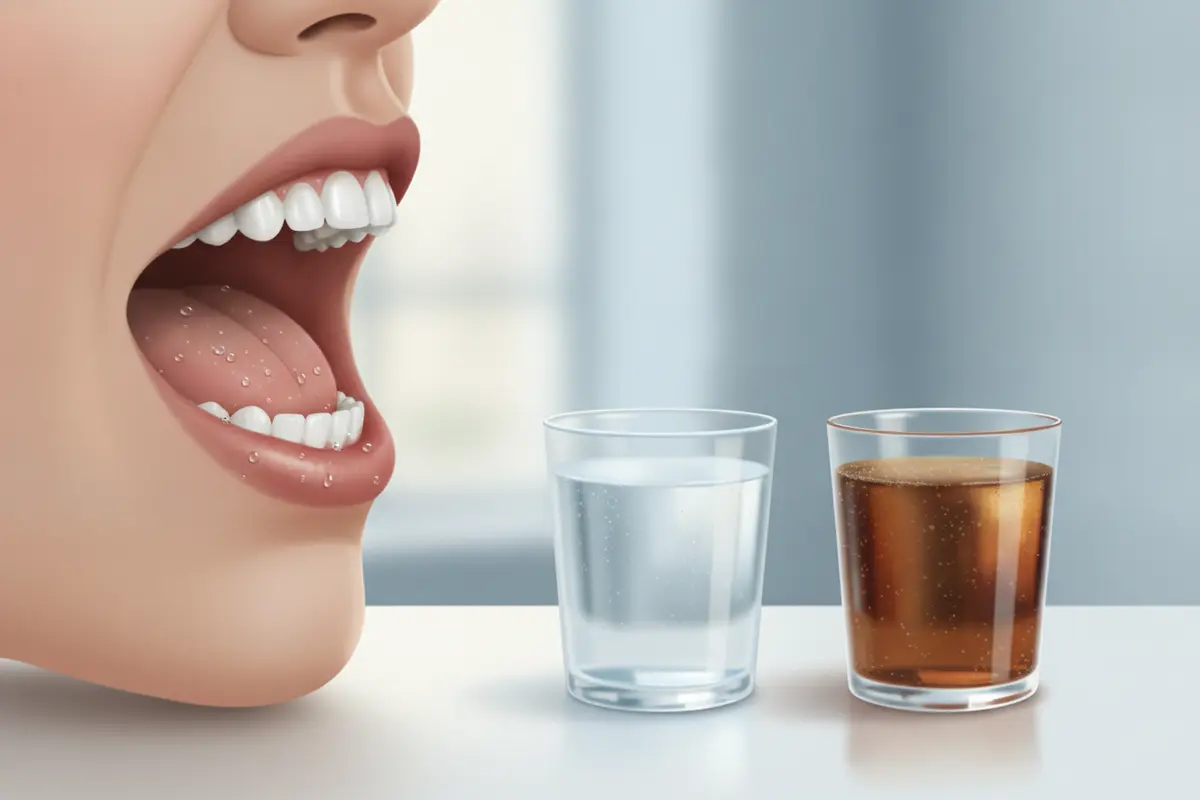
Dryness can also affect behavior in ways that matter. Someone who feels parched may reach for sweetened drinks or lozenges often, or may find brushing and flossing uncomfortable. Sipping water can help with comfort, but it does not replace cleaning between teeth or a dental assessment when symptoms persist. If you notice a new cavity, sensitivity, or a change in your mouth, mention any ongoing dryness at your visit.
For example, a person who keeps a sweetened drink nearby and takes small sips all afternoon may expose teeth to sugar repeatedly. Another person may use a sugar-containing cough drop or candy whenever their mouth feels dry. Those routines are worth discussing, but they are not proof that a cavity will form. Consider what product you use, how often you use it, and whether an alternative that your dental professional considers suitable could meet the same comfort need. Do not skip fluids or necessary medicines in an effort to avoid sugar; ask for individualized guidance instead.
Dryness may also make plaque removal feel less comfortable. If brushing seems unpleasant, the practical risk is that a routine becomes shorter or less consistent. Rather than forcing a major change or stopping care, identify the specific barrier: Is the toothpaste uncomfortable, does the brush irritate your mouth, or is the timing difficult? A dental professional can discuss options for making daily care more manageable while also checking for decay.
What causes dry mouth?
There is not just one cause. Dry mouth can be related to medicines, health conditions, medical treatments, dehydration, or habits such as breathing through the mouth. The American Dental Association’s overview of xerostomia and its possible causes includes medicines, autoimmune diseases, and cancer treatments among the factors that may be involved.
Do not stop or change a prescribed medicine on your own because you suspect it is causing dryness. Instead, make a note of when the symptom began, what medicines or supplements you take, and whether anything has recently changed. A physician or prescribing clinician can advise you about medicine-related concerns; a dental professional can discuss how the symptom may affect your mouth and teeth.
Nighttime dryness can sometimes go along with mouth breathing. A dry bedroom or not drinking enough fluids can also affect how your mouth feels, but persistent symptoms should not automatically be attributed to either. The Cleveland Clinic’s dry mouth overview discusses causes and potential complications, including dental concerns. If dryness is frequent or bothersome, ask a clinician to help consider the cause.
When you are looking for a pattern, record changes without making assumptions. For example, note whether symptoms began around the time a medicine was added, whether they are stronger overnight, or whether they appear on days when you are ill. A timeline can help a clinician ask relevant questions, but timing alone cannot show that one event caused another. If several clinicians are involved in your care, share the same accurate medication list with each rather than independently stopping or substituting a product.
What are dry mouth signs?
People describe dry mouth in different ways. You might feel sticky or parched, need water to swallow dry foods, or find that speaking for a while is uncomfortable. Some people notice a dry feeling mainly overnight; others experience it throughout the day. Tell your dental team how often it happens and whether it interferes with meals, sleep, or oral care.
Also mention any new tooth sensitivity, visible changes, mouth soreness, or trouble keeping up with your usual cleaning routine. These signs do not identify a cause on their own, but they give the clinician helpful context. A sudden or severe change, difficulty swallowing, or other concerning health symptoms warrants prompt advice from an appropriate healthcare professional.
It can help to keep a simple symptom note for several days: when dryness occurs, what you ate or drank, whether it wakes you, and any medicines or products you use. Bring the list rather than trying to remember every detail during an appointment. For a general overview of the practice’s care options, see dental services and treatment information.
Keep the record simple enough to use. A few entries might say: “Woke with a dry mouth three mornings this week,” “Needed water with bread at lunch,” or “Started noticing dryness after my routine changed.” Include any mouth discomfort and what seems to help, but avoid treating a pattern as a diagnosis. If you have a new tooth symptom, note which area is affected and what makes it noticeable, such as chewing or a hot or cold drink. This information can help focus the conversation without delaying care while you gather notes.
How can you protect teeth at home?
Home steps can support comfort and daily oral care, but they do not replace a dental evaluation or treatment for an existing cavity. Consider these practical measures:
- Keep water nearby. Small sips of water may ease a dry feeling. If you are unsure how much fluid is appropriate for you because of a health condition, ask your medical clinician.
- Keep up with brushing and cleaning between teeth. Use the routine and products recommended for you. If dryness makes brushing uncomfortable, ask your dental team for suggestions. Lowell Family Dental Practice has general guidance on brushing and flossing.
- Choose drinks and snacks thoughtfully. Frequent sweetened drinks or sugary snacks can expose teeth to sugars repeatedly. Plain water is a better routine choice for hydration than sipping a sweetened beverage throughout the day. Ask a dental professional how your usual eating and drinking pattern affects your personal risk.
- Ask before relying on lozenges or rinses. Products differ in their ingredients and intended use. If you use a rinse or lozenge often, show the label to your dental professional and ask whether it suits your situation. You can review general information about mouth rinses.
- Ask about fluoride. A clinician can advise whether your current toothpaste and any additional fluoride products fit your needs. For background, see the practice’s information on fluoride.
- Track patterns and possible triggers. Note whether symptoms follow a medicine change, occur mainly at night, or seem associated with particular conditions or routines. Share the notes with the clinicians involved in your care.
These are general steps, not a personalized treatment plan. The best choices depend on why the dryness is happening, your current oral health, and your medical history. Avoid stopping medicines, using products in a way their label does not recommend, or delaying care for a painful or visibly damaged tooth.
It may help to make oral care easier to repeat rather than trying several new products at once. Keep your toothbrush and floss where you can reach them, and choose a time of day when you are less likely to skip the routine. If toothpaste or brushing leaves your mouth feeling uncomfortable, do not assume you have to tolerate it or abandon cleaning. Ask the dental team whether a different product or approach is suitable for you. People who wear dentures or other oral appliances can ask how to keep them clean and whether the appliance may be contributing to irritation or discomfort.
Pay attention to the frequency of sipping and snacking, not just the total amount on one occasion. Repeated exposures to sweetened drinks or snacks across the day may be relevant to decay risk. If you use a product to relieve dryness, check its ingredients and directions rather than assuming that every lozenge, candy, or rinse is alike. A clinician can help you weigh comfort against other oral-health considerations and suggest options that fit your circumstances.
A useful way to put these steps into practice is to change one routine at a time. For a week, you might keep water accessible and note whether that helps with comfort, while continuing your usual brushing and interdental cleaning. If you use a sweetened drink or lozenge often, write down the product and frequency and ask about it at your next dental conversation instead of abruptly replacing something you rely on. Small, observable changes make it easier to tell what is manageable and give your care team concrete information. If you have a medical fluid restriction, follow that clinician’s instructions rather than using a general hydration suggestion.
Check product labels and directions, especially for items you use repeatedly. A rinse meant for occasional use may not be appropriate as a substitute for brushing; a product marketed for dry mouth may have ingredients that are not right for every person. Take the container or a photo of its label to an appointment. This lets the dental team consider the actual ingredients and how you use the product, rather than relying on a brand name or a general description.
What happens at a dental evaluation?
A conversation is a useful first step. Be ready to describe how long you have felt dry, whether it is constant or comes and goes, and whether you have trouble eating, swallowing, speaking, or sleeping. Bring a current list of prescription medicines, over-the-counter products, and supplements. Mention relevant health conditions and any recent medical treatment.
The dental team may ask about your symptoms and review your teeth and mouth. Depending on your situation, an examination or dental imaging may help assess your oral health. Learn more about the role of dental X-rays. The appropriate next step depends on what the clinician finds; not every patient needs the same tests or care.
If decay is present, the team can explain the finding and discuss appropriate options. If the pattern suggests that a medicine or broader health issue could be involved, they may encourage you to contact the clinician who manages that concern. Dental and medical teams can each contribute to understanding persistent dry mouth, and you should not change a prescription without advice from the prescriber.
You can expect the discussion to consider more than the dry feeling alone. The clinician may ask when it began, whether it is worse at certain times, what you drink or use for relief, and whether you have noticed changes in eating, speech, or routine care. The mouth examination can help identify concerns that need attention, such as a tooth that looks different or an area that is sore. Be candid about habits you find difficult to change; the goal is to understand your situation, not to judge it.
If imaging or another assessment is recommended, ask what question it is intended to answer and how the result will affect the next step. You can also ask what should happen first if both a dental concern and a possible medical cause need follow-up. One appointment may not answer every question, particularly when medications or broader health conditions are involved. A clear plan can identify which clinician to contact, what symptom changes to watch for, and whether a follow-up dental visit is appropriate.
| What you notice | What you can do next | Why it can help |
|---|---|---|
| Dry feeling mainly on waking | Note when it happens, consider nighttime patterns, and raise it if it persists. | A pattern can help your clinician ask focused questions about possible causes. |
| Dryness throughout the day or difficulty swallowing food | Keep track of duration and related symptoms; arrange a discussion with a dental or medical professional. | Persistent symptoms deserve an assessment rather than guesswork about the cause. |
| Frequent sweetened drinks or lozenges for relief | Review the products and routine with your dental team; consider plain water for routine sipping. | Frequent sugar exposure can be one factor in tooth-decay risk. |
| New sensitivity, a visible tooth change, or mouth discomfort | Contact a dental professional and describe both the tooth symptom and any dryness. | An examination can clarify whether there is a dental issue that needs care. |
How do you prepare for a dental visit?
A little preparation can make it easier to have a useful conversation. Write down when the dryness started and whether it has changed. Note anything that seems to make it better or worse, and list related symptoms. Bring your medicine and supplement list, and mention any recent changes to your health or treatment. If you have questions about cost or payment options, ask the office before the visit; the practice provides information about financing options.
You can also ask direct questions: What did the exam show? Do I have signs of decay or another oral-health concern? What can I change in my daily routine? Should I speak with the clinician who prescribes my medicine? Is follow-up needed, and when? You do not need to know the cause before making an appointment. Explaining what you feel is enough to start the discussion.
To make the visit more useful, put your questions in order of importance. For instance, first ask whether a new sensitivity needs evaluation, then ask what might be contributing to the dryness, and finally discuss products or routine changes. If you have more than one concern, say so at the start so there is time to address the main ones. Bring the name and dose of medicines if available, but do not worry if you cannot recall every detail; an up-to-date list from your pharmacy or medical record may help. If a family member helps manage your care, they can help organize the list and notes.
Ask the dental team about persistent dry mouth and learn what next steps may fit your situation.
Dry mouth and cavities FAQs
Does dry mouth always cause cavities?
No. Dry mouth can be one factor that may increase cavity risk, but it does not guarantee that decay will develop. Oral hygiene, diet, fluoride, health history, and other factors also matter. If dryness persists, discuss it with a dental professional so you can consider your individual situation.
Can I tell what is causing my dry mouth?
Not reliably from the sensation alone. Medicines, health conditions, medical treatments, mouth breathing, and other factors may play a role. Track when the dryness occurs and share your medicine and health history with the appropriate clinicians. Do not stop a prescribed medicine without speaking with its prescriber.
Should I drink water when my mouth feels dry?
Small sips of water may help with comfort for many people. However, water does not diagnose or treat the underlying cause, and individual fluid needs can vary. If you have been told to limit fluids or have another health concern, follow your clinician’s advice.
When should I contact a dentist about dry mouth?
Consider contacting a dental professional when dryness is persistent, affects eating or oral care, or occurs alongside new tooth sensitivity, visible changes, or mouth discomfort. Seek timely medical advice for severe or sudden symptoms or difficulty swallowing. A clinician can help decide what evaluation is appropriate.
Talk with your dental team
Dry mouth has several possible causes, and its relationship to cavities is only one part of the picture. Track what you notice, continue a consistent oral-care routine, and ask for an evaluation if symptoms persist or you see a change in your teeth or mouth.
Contact Lowell Family Dental Practice to request a visit and discuss your questions with the dental team.
Taking your questions and symptom notes to an appointment can help make the next steps clearer.
Written by
Dr. Iham Gammas, DMDBoard-Certified Implant Dentist & Founder, Lowell Family Dental Practice. Fellow & Master of ICOI and IADI. Associate Fellow of AAID.