A tooth that hurts or has become infected can leave you facing a consequential choice, but symptoms alone do not tell you which treatment fits. The decision should be based on what a dentist finds and on how each option may affect your oral health and plans for the tooth.
When weighing root canal vs extraction, ask your dentist to explain whether the tooth can be restored, what the exam and any needed tests show, and what treatment, risks, follow-up care, and replacement needs each option may involve. The recommendation depends on your individual findings and goals, not a rule that one choice is always better.
For patients in Lowell and Greater Lowell, a useful conversation begins with the examination: your symptoms and dental history are considered alongside the tooth itself and its supporting structures. Knowing what the dentist is checking can help you ask focused questions and understand how the available options apply to you.
Contact Lowell Family Dental to discuss your next step
What a Dentist Checks Before Comparing the Options
Pain, lingering sensitivity, swelling, or a change in a tooth’s color can be reasons to arrange an evaluation. But symptoms alone cannot show whether a tooth can be restored or which treatment is appropriate. Lowell Family Dental lists these signs as reasons to seek assessment, not as a way to diagnose yourself. For example, a recurring gum-line bump or swelling may warrant attention, but it does not by itself settle the question of a possible tooth abscess or its treatment.
Start with your history and symptoms
Tell the dentist when the problem began, what makes it better or worse, whether the discomfort lingers after hot or cold food, and whether you have noticed swelling or a recent injury. Mention relevant dental work and health history, too. These details help guide the examination, but they are only part of the picture. The American Association of Endodontists describes reviewing X-rays and paperwork, discussing symptoms, and examining the affected and adjacent teeth as parts of an office visit (AAE: Your Office Visit).
Examine the tooth and its support
The dentist may look for visible damage, decay, discoloration, or changes in the surrounding gum tissue, and may use tests to understand how the tooth responds. A comprehensive exam can also consider gum health and the structures that support the tooth. Lowell Family Dental says its root canal evaluation uses a thorough examination and digital X-rays to assess the extent of infection. Imaging adds information that cannot be gathered from symptoms alone, though the dentist interprets it alongside the clinical findings.
The comparison depends in part on whether enough healthy tooth structure remains to support treatment and restoration, and on the condition of the surrounding tissues. Those questions are specific to the tooth and the person; a symptom list or a photograph cannot reliably answer them. If imaging or other tests are needed, ask what each one is intended to clarify.
Ask what the findings mean for your choices
Before deciding, ask the dentist to point out what the exam and images show, whether the tooth appears restorable, and what remains uncertain. Ask what options are reasonable in your case, what benefits and risks accompany each, and what restoration or replacement may be needed afterward. You can also ask how the tooth’s support affects the outlook and whether a second opinion or specialist evaluation would help. The AAE recommends discussing treatment options, benefits, and risks after the examination and any necessary tests. The goal is not to choose from symptoms alone, but to understand the findings and make a decision with a clinician who knows your case.
What Root Canal Treatment and Extraction Each Change
The key difference is what happens to the tooth: root canal treatment cleans and seals its interior while leaving the tooth in place; extraction removes the tooth. That distinction affects what remains in your mouth and what restoration or replacement plan may need to be discussed next. The right option depends on the findings from your own dental exam, not a general rule.
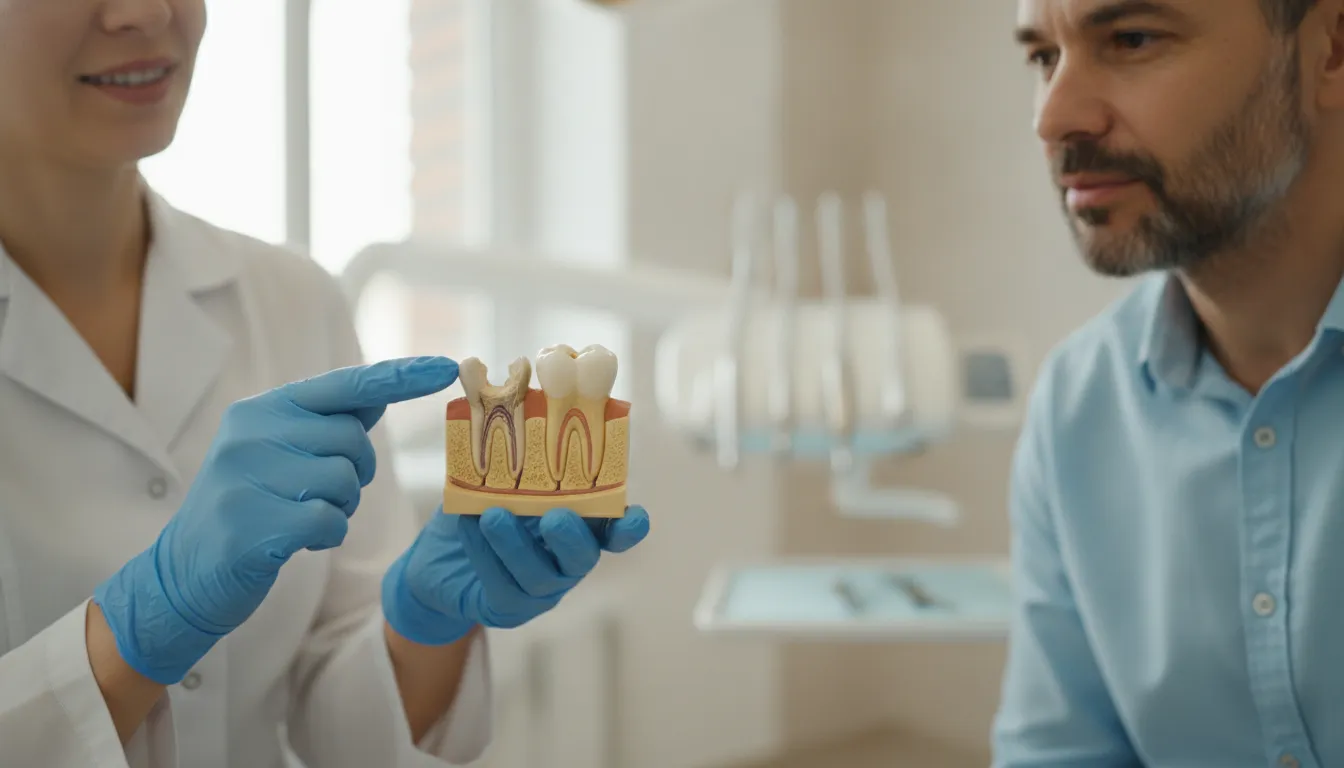
During a root canal, the dentist removes diseased pulp, cleans and disinfects the inner space, then fills and seals it. The natural tooth structure stays in place. At Lowell Family Dental Practice, the root canal treatment process in Lowell includes cleaning and sealing the tooth, with a custom crown described as a way to protect the treated tooth and restore function. Whether that restoration is appropriate for you is part of the treatment discussion.
An extraction is different: the tooth is removed from its socket. It does not leave the same natural tooth to restore, so ask what the space may mean for your bite and whether any replacement plan should be considered. The procedure choice and any next steps depend on your situation; this comparison is a way to frame questions, not a substitute for an examination.
| What changes | Root canal treatment | Extraction |
|---|---|---|
| What is treated | Diseased pulp inside the tooth is removed; the inside is cleaned and sealed. | The whole tooth is removed from its socket. |
| Natural tooth | The natural tooth remains. | The tooth is no longer present. |
| Afterward | A restoration, such as a crown, may protect the treated tooth. | Discuss whether the space needs a replacement plan. |
Neither column is automatically the better choice. A dentist needs to consider the tooth’s condition and explain what each path would involve for you, including restoration after treatment or possible replacement after removal. Ask what the exam shows, what the expected result is, and what follow-up each option may require before deciding.
The American Association of Endodontists describes root canal treatment as a procedure that removes diseased pulp, cleans and seals the inside of the tooth, while extraction removes the tooth and its periodontal attachment. Read the AAE’s comparison of root canal treatment and extraction for more detail. Bring your questions to a Lowell dentist and make the decision together.
When Saving a Tooth May or May Not Be Realistic
Keeping a natural tooth can be a meaningful goal, but whether it is a reasonable option depends on what the examination shows. A dentist considers the tooth’s remaining structure, the condition of the tissues supporting it, the surrounding teeth, and the broader oral-health picture. No single symptom or preference can establish whether a particular tooth can be restored.
If root canal treatment is being considered, ask what would happen after the inside of the tooth is treated. The tooth generally needs a filling or crown to restore and protect it, and the choice depends on the individual tooth and treatment plan. The American Association of Endodontists notes that restored teeth can continue to function, and that many root-canal-treated teeth last a long time with proper care. That general information is not a prediction for one tooth or a guarantee of its lifespan (AAE: Benefits of Root Canal Treatment).
Extraction may be part of the discussion when the dentist does not believe the tooth can be predictably restored. But ask what finding leads to that recommendation and what alternatives remain. In a review of treatment planning, the authors emphasize that decisions should be tailored to the patient’s dentition and preferences rather than treated as a universal formula (review on individualized dental treatment planning). Your priorities matter too: preserving a tooth, the time and follow-up involved, comfort with different procedures, and plans for a gap or replacement may all affect how you weigh the options.
It is reasonable to ask how certain the prognosis is, what could change it, and what the next step would be if the first plan does not work as hoped. A careful comparison should explain the expected benefits, limitations, risks, and future care for each realistic option, rather than treating either root canal treatment or extraction as automatically best.
For a complicated case, you can ask whether a specialist’s opinion would add useful information. Referral may be worth discussing when the diagnosis or treatment plan is complex; it is a question to raise with your dentist, not an assumed requirement. The goal is a decision based on this tooth’s findings and your informed preferences, not a choice made from general rules alone.
How to Compare Recovery, Timing, and the Full Treatment Plan
Compare the care that follows each choice, not just the procedure itself. A root canal is followed by a restoration to protect the treated tooth. After an extraction, you and your dentist may discuss whether to replace the missing tooth, and what that plan would involve. Those next steps can affect the number of appointments, the timeline, and the overall treatment plan.
At Lowell Family Dental, most root canal treatments require one to two appointments, with a personalized timeline provided by the dentist. That is a general estimate, not a promise for every case: the tooth’s condition and the restoration it needs can shape the schedule. The practice’s root canal service page explains its approach, including use of a custom crown to protect a treated tooth and restore function.
Ask whether the tooth can be restored after treatment, what type of filling or crown is appropriate, and whether any additional visit is needed to complete that restoration. The American Association of Endodontists notes that a crown or filling can restore and protect a tooth after root canal treatment (root canal treatment benefits). Your dentist can explain what applies to your tooth rather than assume every case needs the same restoration.
With extraction, removal is one part of the decision. If you are considering the procedure, review Lowell’s information about tooth extractions, then ask what leaving the space would mean for you and whether replacement is advisable. If you choose replacement, options such as a bridge, denture, or implant may involve follow-up appointments and, depending on the plan, care from more than one dental specialty. The AAE describes these as possible parts of replacement after extraction, not requirements for every patient (root canal treatment and extraction considerations).
For a useful comparison, ask the dentist to outline the full sequence for each option: treatment, restoration or replacement, expected appointments, and follow-up. Request an individualized estimate for each complete plan, including what your insurance may cover. This helps you compare realistic options without treating the extraction alone or the root canal appointment as the whole decision.
Questions to Ask Your Dentist Before You Decide
A useful visit should leave you understanding what the exam showed, why each option is being considered, and what would happen after either choice. Bring notes if that helps, and ask the dentist to explain unfamiliar terms. The American Association of Endodontists recommends discussing how treatment choices may affect both the tooth and future dental health, along with the benefits and risks of the available options.
- What did the examination show about this tooth? Ask which findings from the exam, X-rays, or any tests are important, and how they relate to your symptoms. If something is uncertain, ask what additional assessment could clarify it.
- Can this tooth be restored, and what is its prognosis? Ask what factors affect the chance of keeping the tooth functional, what could limit that possibility, and how confident the dentist is in the assessment. A prognosis is specific to the tooth and your circumstances, not a guarantee.
- What are my reasonable options, and why do you recommend this plan? If root canal treatment is not being offered, ask why and whether a referral to an endodontist would be useful. If extraction is recommended, ask whether root canal treatment is an option in your case. The AAE encourages patients to raise these questions and consider a referral when appropriate. See its guidance on questions about saving a natural tooth.
- What treatment or restoration would follow each option? If the tooth is treated and retained, ask whether it will need a filling or crown and when that should happen. If it is removed, ask whether leaving a space or replacing the tooth should be considered, and what replacement choices involve. Lowell Family Dental explains its root canal treatment process; its article on crowns after root canal treatment may also help you prepare.
- What risks, recovery needs, or warning signs should I understand? Ask what discomfort or care to expect, what could go wrong with either plan, and when you should contact the office if symptoms change or recovery does not go as expected.
- What is the timeline and estimated cost for the full plan? Ask how many visits may be involved, whether a specialist or later restoration is part of the plan, and what your insurance may cover. Request a case-specific estimate for each option, including follow-up care, so you can compare the complete pathways rather than a single procedure fee.
There is no one answer that fits every tooth. The AAE notes that patients should feel free to raise questions or concerns before, during, and after treatment, so ask for clarification until the plan makes sense to you.
A Clear Next Step for Lowell Patients
A useful decision starts with understanding what is happening in your tooth and what each option would mean for your overall treatment plan. At Lowell Family Dental Practice, the evaluation described on the practice’s root canal service page includes an examination and digital X-rays to assess the infection. Those findings help the dentist discuss whether the tooth may be treated and restored, whether extraction is recommended, and what questions still need answers.
Neither a symptom nor a preference alone can determine the right treatment. Share what you are experiencing, any concerns about treatment, and what matters most to you, such as keeping the natural tooth when possible, understanding the full sequence of care, or planning around timing. Ask the dentist to explain the expected benefits and risks, the tooth’s prognosis, any restoration or replacement needs, and whether another clinical opinion or referral would help. A plan should fit your exam findings and priorities, rather than assume that the same choice works for everyone.
If root canal treatment is among the options, ask what the process and follow-up would involve in your case. Lowell Family Dental notes that most root canal treatments there require one to two appointments, while the dentist provides a personalized timeline. That guidance is specific to the practice’s root canal care; your actual treatment plan and schedule depend on your circumstances. You can review the service details before your visit, then use the appointment to compare complete plans rather than only the first procedure.
For Lowell and Greater Lowell patients, the practical next step is an evaluation and a conversation about the alternatives. Bring your questions, and make sure you understand the reasoning before deciding how to proceed.
Frequently Asked Questions
What is healthier, extraction or root canal?
Neither choice is healthier in every situation. A root canal treats the inside of a tooth while keeping it in place; extraction removes it. The better fit depends on whether the tooth can be restored, the health of nearby supporting tissues, your overall oral health, and your preferences. Ask your dentist to explain the expected outcome and the full plan for either option. The American Association of Endodontists compares the two approaches.
Is it better to get a tooth pulled instead of a root canal?
Not automatically. Extraction may be considered when a tooth cannot reasonably be restored, while root canal treatment may be an option when the tooth can be treated and protected. Removing it also raises the question of whether and how to replace it. Ask what the examination shows and which alternatives are suitable. Discuss how each plan could affect chewing and future care.
What are the disadvantages of a root canal?
Root canal treatment does not end the planning: the treated tooth may need a filling or crown for protection, and the tooth’s condition affects its outlook. It may not be appropriate if the tooth cannot be restored. Ask about the restoration, visits, and risks. Ask what happens if the tooth is not treatable. The AAE describes restoration after treatment.
Why do dentists push for root canals?
A dentist may recommend one to treat diseased or infected tissue while preserving the natural tooth, if the exam supports that option. A recommendation should include the reasons, likely benefits and risks, and alternatives, including extraction when appropriate. If you feel pressured or are unsure, ask for the findings and a clear comparison, or ask whether a specialist opinion would help.
Contact Us to Discuss Your Next Step
Weighing a root canal against extraction? A conversation with the practice can help you understand what an examination may clarify and which questions to bring to your visit. Your options depend on your individual findings, so there is no need to decide from general information alone. To discuss an examination and possible next steps with Lowell Family Dental, contact our team.
Written by
Dr. Iham Gammas, DMDBoard-Certified Implant Dentist & Founder, Lowell Family Dental Practice. Fellow & Master of ICOI and IADI. Associate Fellow of AAID.