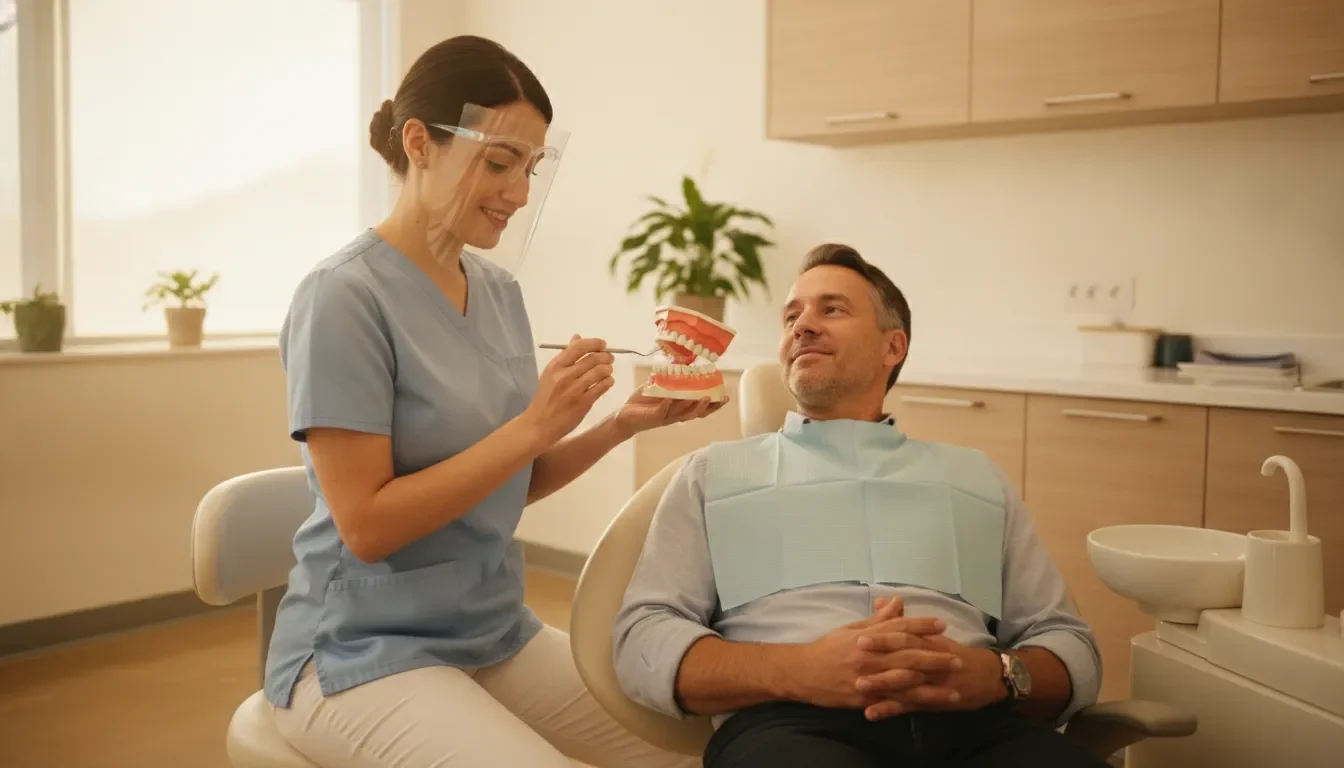
Taking charge of your health means being proactive, not just reactive. While we often focus on diet and exercise, proactive oral care is just as vital for your long-term well-being. Early detection is the single most important factor in successfully treating oral cancer, which is why screenings are a core part of our preventive care. We use the oral cancer screening ViziLite system to help us spot potential issues at their earliest stages. This simple, two-minute addition to your regular dental exam is a powerful step you can take to stay ahead of your health and ensure your mouth is as healthy as it can be.
Key Takeaways
- ViziLite enhances your regular check-up: This quick, painless screening works alongside a traditional visual exam. It uses a special light to help your dentist spot abnormal tissue that might otherwise go unnoticed, giving you a more thorough evaluation.
- Prioritize early detection for your health: The main advantage of ViziLite is its ability to help find potential issues at their earliest and most treatable stage. Making this screening part of your annual dental visit is a proactive step toward protecting your long-term health.
- An abnormal result is a starting point, not a diagnosis: If ViziLite flags an area, it simply means further investigation is needed. This result is a signal for you and your dentist to discuss the next steps, which could range from simple monitoring to a biopsy for a definitive answer.
What Is ViziLite Oral Cancer Screening?
When it comes to your health, being proactive is always the best approach. That’s especially true for oral cancer. At Lowell Family Dental Practice, we use every tool available to ensure your mouth is as healthy as it can be. One of those tools is ViziLite, an advanced screening system that helps us spot potential issues early. Think of it as an extra set of eyes that works alongside a traditional visual exam. It’s a simple, painless step we can take together to give you peace of mind about your oral health. This screening is part of our commitment to providing comprehensive preventive care for you and your family.
How Does ViziLite Work?
The science behind ViziLite is pretty neat and straightforward. The process starts with you swishing a cleansing rinse, similar to a mouthwash, for about a minute. This rinse helps prepare the lining of your mouth. Next, your dentist will use a small, specialized light that emits a gentle, bluish-white glow. Healthy, normal cells absorb this light and appear dark. However, any abnormal cells will reflect the light differently, causing them to appear bright white. This contrast makes it much easier for your dentist to see any suspicious spots that might need a closer look. It’s a simple way to highlight areas that might otherwise be missed during a routine check-up.
What to Expect During Your ViziLite Screening
If you’re worried about a complicated or uncomfortable procedure, you can relax. A ViziLite screening is incredibly quick and completely painless, typically taking only about two minutes from start to finish. After you use the special rinse, your dentist will dim the room lights slightly and examine your mouth with the ViziLite. There’s no discomfort involved, just a bright light. The entire process is non-invasive and adds just a couple of minutes to your regular dental appointment. It’s a small addition to your visit that provides a significant amount of information about your oral health. If you’re interested, you can easily request an appointment to get your screening.
ViziLite vs. a Traditional Visual Exam
It’s important to understand that ViziLite is a screening tool, not a replacement for a traditional visual exam. Your dentist’s trained eye is still the most critical part of any oral cancer check. ViziLite works as an enhancement, helping to make any visible lesions or abnormal tissue stand out more clearly. While it doesn’t necessarily find new spots that are invisible to the naked eye, it can make existing ones more distinct, confirming what your dentist might already suspect. We use it as part of a complete examination to ensure we have the most detailed view of your oral health possible, combining advanced technology with our professional expertise.
Why Early Detection of Oral Cancer Is Critical
Talking about cancer can be unsettling, but knowledge is your greatest tool for staying healthy. Oral cancer is serious, but it’s also highly treatable, especially when it’s found early. This is why your regular dental check-ups are so much more than just a cleaning. During your preventive care visit, we’re not only looking at the health of your teeth and gums; we are also performing a careful screening for any signs of oral cancer. Catching potential issues in their beginning stages is the single most important factor in achieving a positive outcome, and it’s a key part of our commitment to your overall well-being.
Key Oral Cancer Statistics
While more than 35,000 people in the U.S. are diagnosed with oral cancer each year, the most critical statistic is the one about survival. When oral cancer is found and treated in its early, localized stage, the five-year survival rate is over 85%. This number highlights why early detection is not just helpful, it’s life-saving. Unfortunately, many oral cancers are found at later stages, which can make treatment more complex. The goal of regular screenings is to shift that pattern, giving every patient the best possible chance for a successful recovery. These simple, painless checks are a vital part of your health routine.
Know the Primary Risk Factors
Certain lifestyle habits and health factors can increase your risk of developing oral cancer. Being aware of them can help you make informed choices for your health. The most well-known risk factors include using any form of tobacco (cigarettes, cigars, or chewing tobacco) and heavy alcohol consumption. Other factors include a family history of cancer, excessive sun exposure on your lips at a young age, and infection with certain strains of HPV (human papillomavirus). It’s important to remember, however, that oral cancer can also occur in people with no known risk factors. This is why consistent screenings are essential for everyone, regardless of their personal history or lifestyle.
How Effective Is ViziLite Screening?
When we talk about new dental technologies, it’s natural to wonder how well they actually work. ViziLite is a powerful aid in our oral health toolkit, but it’s important to understand both its strengths and its limitations. The goal is always to give you the clearest possible picture of your oral health so we can make the best decisions together.
The Benefits: Seeing What the Naked Eye Can’t
The main advantage of ViziLite is its ability to highlight potential problem areas that might be missed during a traditional visual exam. The system uses a special fluorescent light that causes abnormal cells to appear distinctly different from healthy tissue. This can help us spot suspicious lesions in their earliest stages. Since finding oral cancer early is one of the most important factors for successful treatment, ViziLite serves as a key part of our preventive care philosophy. It’s an extra measure of security, giving us a deeper look at your oral health and helping ensure nothing is overlooked.
Understanding ViziLite’s Limitations
While ViziLite is a helpful screening tool, it’s not perfect. It’s important to know that the technology can sometimes flag an area that turns out to be completely harmless. This is known as a “false positive,” and while it’s always better to be safe than sorry, it can cause unnecessary worry. Some studies on ViziLite have also shown mixed results in its ability to find certain pre-cancerous cells. We believe in being transparent about these limitations so you can have a realistic understanding of what the screening can and cannot do.
Why ViziLite Is a Tool, Not a Diagnosis
Think of ViziLite as an advanced detection device, not a final diagnostic test. It provides valuable information that helps guide our clinical judgment, but it doesn’t give a definitive answer on its own. If the screening reveals an abnormal area, it simply tells us that we need to investigate further. The gold standard for diagnosing oral cancer is still a biopsy, where a small tissue sample is taken for analysis. The expertise and experience of your dental team are crucial in interpreting the results and determining the right next steps. Our knowledgeable staff uses ViziLite as one of many tools to ensure you receive the most thorough care possible.
Should You Get a ViziLite Screening?
Deciding to get any new screening can feel a little overwhelming, but this one is straightforward and completely painless. ViziLite is a specialized tool that helps your dentist identify unusual cells in your mouth and throat that could be early signs of cancer. The main goal is to spot potential issues long before they become serious, giving you the best possible chance for a positive outcome. As dental experts point out, “Finding oral cancer early is very important for successful treatment. ViziLite makes this early detection possible.” It’s not a diagnostic tool on its own, but rather a highly effective screening method that illuminates things we can’t see with the naked eye.
Think of it as an extra layer of protection for your long-term health. It works alongside a traditional visual exam to give you and your dentist a more complete picture of your oral wellness. While a visual check is essential, some abnormal tissues aren’t visible under normal light. ViziLite uses a special light that makes these areas stand out, flagging them for closer inspection. It’s a simple, quick process that adds a powerful layer of insight to your regular dental visit, helping ensure your mouth is as healthy as it can be and giving you valuable peace of mind.
Who Is a Good Candidate for ViziLite?
While anyone can get oral cancer, certain lifestyle factors and age can increase your risk. If you use tobacco, drink alcohol heavily, or are over the age of 40, it’s a good idea to talk to your dentist about a ViziLite screening. However, it’s important to know that risk factors don’t tell the whole story. Surprisingly, “About 25% of people who get oral cancer do not have any known risk factors,” which is why these screenings are a valuable preventive measure for all adults. It’s a simple step that provides peace of mind, regardless of your personal history.
How Often Should You Get Screened?
For oral cancer screenings to be effective, they need to be a regular part of your health routine. We recommend getting screened at every dental check-up or at least once a year. This consistent approach helps us track any changes over time and catch potential problems at the earliest possible stage. Being proactive is key, especially when you consider the statistics. Finding and treating oral cancer early can dramatically improve a person’s chance of surviving for five years by 80-90%. Regular screenings are a small investment of time for a significant benefit to your health.
What Your ViziLite Results Mean
After your ViziLite screening, your dentist will discuss the findings with you right away. The process is straightforward, and understanding what the results mean can help you feel more in control of your oral health. Remember, ViziLite is a screening tool designed to help us see things more clearly. It’s the first step in a conversation about your health, not the final word. Let’s walk through what different results can mean and what comes next.
Normal vs. Abnormal Findings
During a ViziLite screening, healthy oral tissue absorbs the special light and appears dark. This is considered a normal finding. However, some areas might reflect the light and appear bright white. This is what we call an “abnormal” finding. The science behind ViziLite shows that abnormal cells have different properties that cause them to reflect light. An abnormal finding simply flags a spot for closer inspection. It could be caused by something as simple as a cheek bite or minor irritation, but it helps your dentist identify areas that need extra attention during your regular visual exam.
What Happens After an Abnormal Result?
First, don’t panic. An abnormal ViziLite result is not a cancer diagnosis. It’s a sign that an area needs a closer look. If we find a suspicious spot, we will carefully document it. Depending on the situation, we might recommend monitoring the area to see if it changes over time. In other cases, the best course of action is a simple and painless biopsy. This involves taking a tiny tissue sample from the area to be analyzed in a lab. A biopsy is the only way to get a definitive diagnosis and is a standard part of our comprehensive dental services. It gives us the clear answers we need to ensure you get the right care.
Questions to Ask Your Dentist
Being an active partner in your health care is so important. If you have a ViziLite screening, here are a few great questions to ask your dentist:
- What did you see during my screening?
- Based on my results, what are the next steps?
- How often do you recommend I get screened for oral cancer?
- Are there any specific signs I should watch for at home between visits?
These questions open up a dialogue and help you understand your oral health more deeply. We are always here to answer your questions and make sure you feel comfortable and informed. Ready to have that conversation? You can request an appointment with us online today.
Schedule Your ViziLite Screening in Lowell
Taking charge of your health is one of the best things you can do, and that includes being proactive about your oral wellness. If you’re looking for an extra layer of assurance, a ViziLite screening is a simple, powerful tool we use to protect your health. It’s an important part of our commitment to providing comprehensive dental services that look after your overall well-being, not just your teeth.
The screening itself is quick, easy, and completely painless. It only takes a couple of minutes during your regular check-up. First, you’ll rinse with a special solution. Then, your dentist will use the ViziLite, a unique light that helps identify abnormal tissue that might not be visible during a standard visual exam. Think of it as an extra set of eyes that gives us a clearer picture of your oral health.
Early detection is key when it comes to oral health concerns, and ViziLite helps us spot potential issues at their earliest, most treatable stages. Our dedicated team believes in using the best available technology to give you and your family peace of mind. This advanced screening is just one more way we can partner with you to maintain your health for years to come.
Ready to take this simple step? You can add a ViziLite screening to your next preventive care visit. Request an appointment online or give our Lowell office a call today to schedule your visit. We’re here to answer any questions you may have.
Related Articles
- Oral Cancer – Lowell Family Dental Practice & Implant Center
- HPV and Oral Cancer – Lowell Family Dental Practice & Implant Center
- Tobacco – Lowell Family Dental Practice & Implant Center
- Lip Service – Lowell Family Dental Practice & Implant Center
Frequently Asked Questions
Is the ViziLite screening really painless? What does it feel like? Yes, it is completely painless. The process involves swishing a rinse that tastes similar to a regular mouthwash. After that, your dentist will look inside your mouth using a small light. You will not feel anything from the light itself; it simply illuminates the inside of your mouth. There is no poking, scraping, or discomfort involved, making it one of the easiest and quickest health screenings you can get.
If I don’t smoke or drink, do I still need an oral cancer screening? This is a great question, and the answer is yes. While tobacco and alcohol use are major risk factors, about a quarter of all oral cancer patients have no traditional risk factors. Because it can affect anyone, we view oral cancer screening as a vital part of routine preventive care for all adults. Think of it as a standard safety check for your overall health, regardless of your lifestyle.
What happens if the screening finds an abnormal spot? Does that mean I have cancer? Finding an abnormal spot does not mean you have cancer. It is simply a signal that an area needs a closer look. Often, these spots are caused by something harmless, like a small irritation from biting your cheek or a canker sore. If we see an unusual area, we will discuss it with you. We may decide to monitor it to see if it heals on its own, or we might recommend a biopsy, which is a simple procedure to get a definitive answer.
Is ViziLite screening covered by dental insurance? Coverage for ViziLite can vary quite a bit between different insurance providers and plans. Some plans consider it a covered preventive service, while others may not. The best way to know for sure is to contact your insurance provider directly. Our office staff is also very experienced with these questions and can help you understand your benefits before your appointment.
How is ViziLite different from the visual check my dentist already does? Your dentist’s visual examination is the most important part of an oral cancer screening. ViziLite acts as an enhancement to that exam. It uses a special fluorescent light that can make abnormal cells appear bright white, highlighting areas that might be subtle or difficult to see under normal light. It helps confirm what your dentist sees and provides an extra layer of security, ensuring the most thorough check possible.
Written by
Dr. Iham Gammas, DMDBoard-Certified Implant Dentist & Founder, Lowell Family Dental Practice. Fellow & Master of ICOI and IADI. Associate Fellow of AAID.