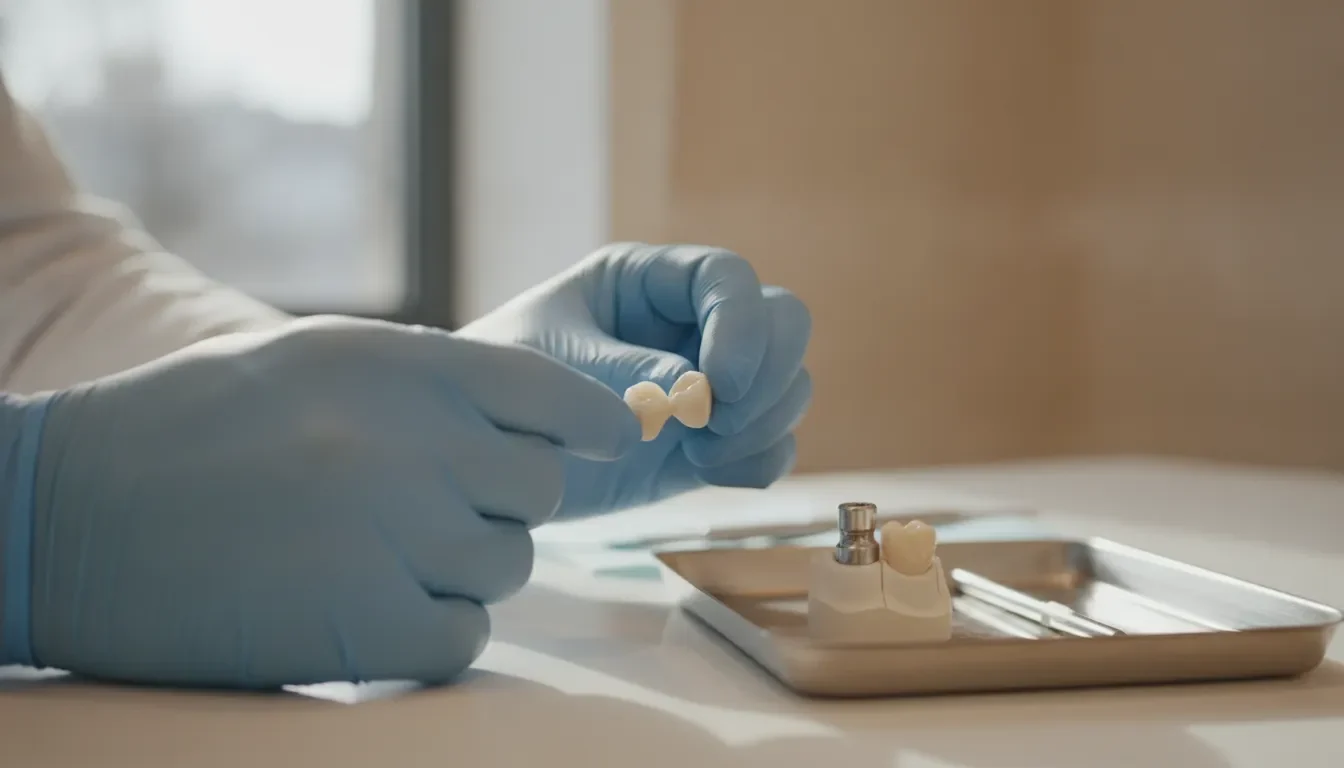
Replacing a missing tooth with a dental implant takes several months of patient healing. Dr. Gammas and his team guide patients through every stage of this journey.
The dental implant process steps involve five main stages to replace missing teeth with a permanent, lifelike solution. First, patients meet with Dr. Gammas and his team for a visit to check bone density and oral health. You can find more details in Dental Implants in Lowell MA: Your Complete Guide from a Board-Certified Specialist. Next, the titanium implant post is surgically placed into the jawbone to act as a sturdy root. This stage is followed by a healing period of three to eight months, known as osseointegration, where the bone fuses to the implant. Once healed, a connector called an abutment is attached to the post. Finally, a custom dental crown is fitted to complete the new tooth. This process ensures solid support per Mayo Clinic.
Understanding each phase helps you feel more comfortable and prepared for your dental treatment. The journey to a healthy smile starts with a detailed check of your specific needs. Your first visit focuses on Step 1: Initial Consultation and Bone Density Evaluation. The path begins with
Dental Implant Process Steps: Step 1: Initial Consultation and Bone Density Evaluation
Your path to a full smile starts with a visit to our office in Lowell, MA. This first meeting is the base for all your care. Dr. Gammas and his team use their board-certified implant specialist skills to help you feel at ease. We want you to know the dental implant process steps well before we begin. This visit is not just a check; it is a time to build trust.
Summary of the dental implant process steps
To give you a clear map, here are the five key steps we will follow during your treatment:
- Initial Consultation: Dr. Gammas and his team perform an exam and take 3D scans to check your bone density.
- Preparation and Grafting: If your bone density is low, we will do a bone graft to build a strong foundation.
- Implant Placement: The titanium post is surgically placed under local anesthesia.
- Osseointegration: Your bone heals and fuses to the titanium post over three to eight months.
- Crown Placement: An abutment is attached, and your custom dental crown is fitted to complete your smile.
Learning about your dental care
We feel that learning about your care is the most vital part of the start. During your visit, we will walk you through each step of the work. You can ask any questions you have about the process or the costs. Dr. Gammas and his team make sure you feel sure about your path to a new smile. This focus on clear talk helps reduce fear for many people in Lowell who feel nervous about the dentist. We take our time so you never feel rushed.
Checking your health for dental implants
Not everyone can get a dental implant right away. You may be a good fit for implants if your jawbone has reached its full growth. You also need to have healthy mouth tissues that are free of gum disease. These traits ensure that the titanium post has a strong and safe place to stay. If your bone is still growing or if you have gum issues, we may need to wait or do other work first. We look at your past health to make sure the work is safe for you.
Mapping your plan with 3D scans
We use a special 3D X-ray called a CBCT scan to look deep into your mouth. This tool shows us your bone depth and where your nerves are in high detail. It lets us plan the exact spot for each dental post with great care. We do not just look at your teeth; we look at your whole jaw structure. This high-tech check helps us map out a plan that fits your exact needs. It removes the guess work from the surgery phase.
Dr. Gammas and his team use these scans to avoid risks and plan for success. We want the best outcome for your health and your smile. Once we have a clear map, we can tell you how long the process will take for your case. We will also talk about if you need a bone graft to add more support. Our goal is to give you a smile that lasts a long time and feels like your own teeth. We will talk about every detail, from the post to the final crown, so you know what to expect.
Step 2: Extraction and Bone Grafting (when needed)
The second part of the dental implant process steps involves prepping your mouth for the new tooth. Not every patient needs this part of the journey. If you still have the bad tooth in place, Dr. Gammas and his team must remove it first. In other cases, you might need to build up the bone in your jaw to provide a strong base for the implant.
Preparing for Your New Tooth
If a bad tooth is still in your mouth, it must be taken out before the implant can be placed. Dr. Gammas and his team focus on your comfort during this step. They use numbing agents so you do not feel pain during the pull. For many people, this feels like a normal tooth removal. This step is the first move toward a full smile.
Once the tooth is gone, the area must be cleaned and set for the next phase. Sometimes the implant can go in right away. More often, the site needs time to heal or gain more bone strength. Dr. Gammas and his team will tell you which path is best for your smile.
Strengthening the Base
A strong jawbone is needed to hold a dental implant in place. If your jaw is too thin or soft, you might need a bone graft. This step adds new bone material to the area where the implant will go. A bone graft may be necessary if your jawbone lacks the sufficient density or volume required to securely support an implant.
There are a few ways to perform a graft. Dr. Gammas and his team might use a small piece of bone from another part of your body. They can also use special lab material. Over time, your natural bone grows into the graft. This creates a solid anchor for the titanium post that will act as your new tooth root.
Comfort and Safety First
It is normal to feel nervous about extractions or grafting. Dr. Gammas and his team value a gentle approach to make sure you feel safe. They explain each part of the plan before they start. Most patients only feel pressure, not sharp pain, during these steps. This care helps you stay calm throughout the process.
You will receive clear notes on how to care for your mouth at home while you heal. Following these steps helps you stay comfortable. It also keeps the site healthy for the next surgery. If you have a bone graft, it can take a few months for the new bone to grow strong enough.
This wait time is vital for long-term success. While it adds time to the total process, it ensures that your new tooth stays firmly in place for years. Dr. Gammas and his team will track your progress to find the best time for the next step.
Step 3: Implant Post Placement , What Happens During Surgery?
The dental implant placement is the core of the restoration process. During this visit, dental implant placement involves setting a titanium post into the bone. These posts act as new roots for your missing teeth to give you a stable base. Dr. Gammas and his team use precise tools to make sure the post sits in the best spot for your smile.
Comfort and Sedation Options
We want you to feel calm and relaxed while we work. Most patients do well with local numbing to keep the area dull. We also offer sedation choices if you feel anxious about the visit. These tools help make the dental implant process steps feel smooth and stress-free. Most people find the care is easier than they thought it would be.
The Surgical Steps
First, Dr. Gammas and his team make a small cut in the gum to reach the bone. They use a special tool to create a space for the post. Dental implants sit inside your jawbone to serve as the roots of your new teeth. Once the post is in place, we may close the gum over it. This helps the site stay safe while you start to heal at home.
What to Expect After Surgery
Like any medical care, this work has some small risks like minor infection. But health risks from this surgery are small and easy to treat. You might feel some swelling or minor pain after the numbing wears off. Most of this discomfort happens in the first 48 to 72 hours. We will give you clear steps to follow so you can recover well in Lowell.
Step 4: Osseointegration , How Long Does Healing Take?
The most vital phase of the Dental Implants in Lowell MA: Your Complete Guide from a Board-Certified Specialist is called osseointegration. This natural process occurs when your jawbone heals tightly around the titanium post to give solid support for your new teeth. At Lowell Family Dental Practice, Dr. Gammas and his team watch this growth to make sure the metal root stays in place. According to the Mayo Clinic, this deep bond lets the post act just like a real tooth root.
The timeline for bone growth
Most people want to know how long they must wait before getting their final crown. Often, a dentist will keep a new post load-free for 3 to 8 months to let the bone fully fuse. This stage is known as conventional loading. It is a safe way to keep the post from moving or failing. Research from the National Institutes of Health shows that giving your body time to build new bone is the key to a good result.
Commitment to the healing process
Fixing your smile is not a fast task. You must be ready to commit several months to the process to get the best outcome. During this time, the bone grows into the small grooves on the post. This builds a base that will not slip or make noise like old dentures might. Dr. Gammas and his team will check your mouth often during these months to make sure you are ready for the next step.
Factors that affect your speed
Your own health plays a big part in how fast you heal. Things like bone strength, age, and health habits can change your path. People with a strong jaw may heal fast, while those who need a bone graft might need more time. At our office in Lowell, MA, we use high-tech tools to watch your healing and find the best time to move on. We want to make sure your new tooth is built on a solid base before we finish the work.
Step 5: Abutment placement and final crown fitting
The last phase of your work with Dr. Gammas and his team brings your smile back to life. After the bone has healed around your new post, it is time to add the parts you can see. This part of the dental implant process steps makes sure your new tooth looks and feels like a real part of your mouth. You will soon be able to eat, speak, and smile with joy again. Our team in Lowell is here to guide you through these final steps so you get the best result. We want you to feel proud of your new smile.
Connecting the implant with an abutment
Once the post is firm in your jaw, Dr. Gammas and his team will place the abutment. A full dental implant consists of three parts: the titanium post, the abutment, and the final crown. This minor second step is a quick way to attach the connector piece. The team may use a local numbing agent to keep you at ease while they work on your gum line. This step is vital to ensure the new tooth has a strong base to sit on.
The abutment is a connector piece that screws into the implant post. It stays above the gum line to hold your new tooth in place. In some cases, Dr. Gammas and his team can place this part during the first surgery. If not, they will open the gum slightly to reach the post and attach the piece. Your gums will then need a week or two to heal around this new part before the final step. During this time, the gum tissue shapes itself to look real around the new crown.
Crafting your custom dental crown
After your gums heal, the team takes a mold of your mouth. They use these models to make a crown that matches your other teeth in shape and color. This tooth is made to fit just right in the gap. It must line up with your bite so it feels real when you chew. Dr. Gammas and his team take great care to make sure the fit is perfect for your comfort. A good fit helps you avoid any pain or pressure when you use your new tooth.
This final step is part of the Restorative Dentistry Services offered at our practice. The crown is usually screwed or glued onto the abutment. Once in place, it acts like a strong, real tooth. You will not need to worry about the tooth slipping or moving when you talk or eat. The result is a clean look that blends in with your real smile. Your new tooth will look so real that most people will not even know it is an implant.
Benefits of parts that do not decay
One of the best things about this process is the strength of the parts used. Dr. Gammas and his team use high-quality titanium and porcelain. These implant parts cannot decay like your own teeth do. This means you do not have to worry about cavities in your new implant. It gives you a long-term fix that stays strong for many years with proper care. This makes it a great choice for a lasting, healthy smile that you can trust.
Even though the implant cannot rot, you must still keep your gums healthy. Brushing and flossing around the crown is vital to keep the area clean. Regular checkups at our Lowell office will help make sure your smile stays in top shape. Dr. Gammas and his team will check the implant at each visit to make sure it is still firm and healthy. By following these simple steps, you can enjoy the use of your new tooth for a very long time. We are proud to help you reach your goals for a better smile.
Can you really get an implant in one day? Understanding same-day implants
The dental implant process steps often take many months. But many people ask if they can get a new tooth in just one visit. This is often called a same-day implant. It is a real choice for some patients. Dr. Gammas and his team can help you find out if this path is right for you during a visit to our Lowell office.
The choice of loading time
In the past, dentists always waited months for the bone to heal before adding a tooth. This is known as the standard way to load an implant. Modern dental care now uses other ways too. Doctors can now place a temporary tooth right away or very soon after the surgery. These ways are called immediate or early loading. All of these loading paths are very successful and show few problems.
You may be a good fit for this if you have a strong jawbone. It is also helpful if the tooth is in a spot that does not take a lot of force when you bite. Choosing the right path is a key part of the dental implant placement plan. Our team looks at your health needs to pick the best timing for your new smile.
Comparing the two implant paths
To help you understand your options, here is how the conventional and same-day dental implant process steps compare.
| Feature | Conventional Implants | Same-Day Implants |
|---|---|---|
| Total Timeline | 3 to 9 months for full healing and fusion. | Temporary tooth placed on the same day as surgery. |
| Primary Benefit | Allows maximum bone fusion and stability first. | Saves multiple visits and restores smile immediately. |
| Candidacy Requirements | Standard jawbone density and good oral health. | Excellent natural jawbone density and volume required. |
| Discomfort and Recovery | Discomfort peaks in the first 48 to 72 hours. | Discomfort peaks in the first 48 to 72 hours. |
Success for different paths
Research shows that getting an implant fast can work just as well as the old way. Studies find no big change in how well the implants stay in place. Health risks are also about the same for both fast and slow paths. The main goal is always to make sure the post stays firm in your jaw. Dr. Gammas and his team focus on your long-term health while trying to save you time.
We know that your time is valuable. This is why our practice offers Saturday hours from 8:00 AM to 3:00 PM. These times make it easier for you to fit the surgery into your busy life. Whether you need a same-day tooth or the standard path, we are here to help you through every step of your care.
Frequently Asked Questions
How long does the dental implant process take from start to finish?
The full journey to replace a missing tooth often takes three to nine months. This time helps your jawbone bond with the titanium post in a process called osseointegration. As the National Institutes of Health states, implants are often kept load-free for three to eight months to keep them stable. Dr. Gammas and his team will track your healing to decide when you are ready for your new dental crown.
How painful is the dental implant placement procedure?
Most patients feel very little pain during the surgery because Dr. Gammas and his team use numbing agents. You may feel some minor ache or swelling for two to three days after the work is done. As the Mayo Clinic notes, most pain is easy to manage and goes away fast. Using ice packs and taking your meds can help you feel better as you heal at home in Lowell.
Does smoking affect the success of dental implants?
Yes, smoking can slow down your healing and raise the risk that the implant will fail. Tobacco use lowers blood flow to your gums. This makes it hard for the bone to bond with the post. Research shows that smoking can lead to more issues during the healing phase. Dr. Gammas and his team suggest that you stop smoking to give your new smile the best chance to last a long time.
Are there any risks with dental implant surgery?
Like any minor surgery, there are small risks such as infection or nerve damage. These issues are rare and easy for Dr. Gammas and his team to treat. The Mayo Clinic states that these risks are low for most healthy patients. We check your health history during your first visit to make sure the work is safe for you. This helps us plan for a smooth and safe tooth replacement process.
Schedule your free dental implant consultation in Lowell
Waiting to replace a missing tooth can lead to bone loss and shifting teeth. This makes the dental implant process much more costly and hard to finish if you wait too long. By starting your care today, you give your jaw the months it needs to heal well. This ensures you can get back to eating and smiling with pride as soon as possible. Our team offers Saturday hours to fit your life, so you can get the care you need without the stress of a busy week.
Ready to book your visit? Call (978) 458-1179 to schedule your free dental implant consultation with Dr. Gammas and his team.
Written by
Dr. Iham Gammas, DMDBoard-Certified Implant Dentist & Founder, Lowell Family Dental Practice. Fellow & Master of ICOI and IADI. Associate Fellow of AAID.