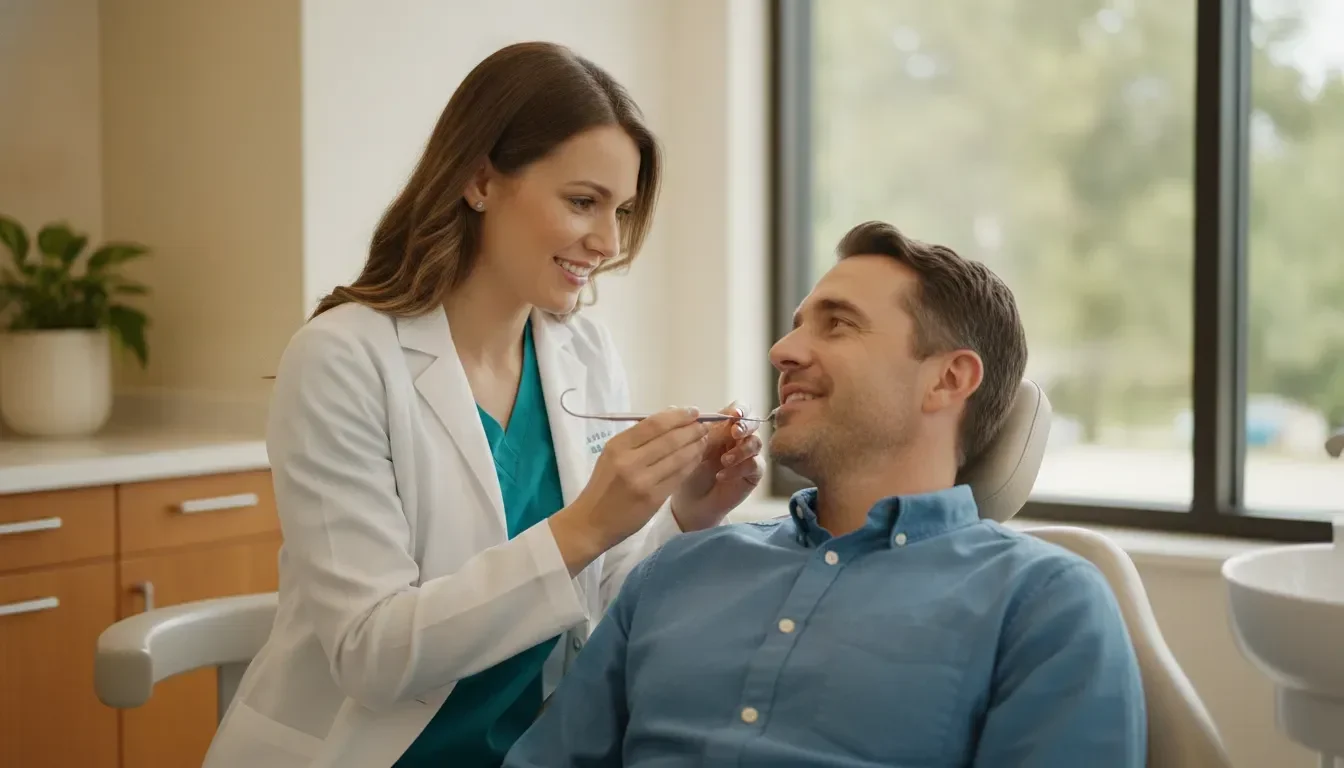
A broken tooth can feel alarming, especially when it happens without warning. Start by protecting the area rather than testing it: collect any fragment, rinse gently with warm water, and avoid chewing on the affected side. Then arrange a dental evaluation, even if the tooth is not painful.
Need prompt guidance after a tooth breaks? Contact Lowell Family Dental Practice online to discuss an evaluation with Dr. Gammas and his team.
If you are wondering about broken tooth what to do, save the fragment in a clean container, use gauze for bleeding, place a cold compress outside your cheek, and contact a dentist promptly. Seek emergency medical care for uncontrolled bleeding, severe swelling that affects breathing or swallowing, major facial trauma, or loss of consciousness.
Pain and sensitivity can occur when a fracture reaches deeper layers of the tooth, but symptoms alone cannot show how extensive the damage is. An evaluation can help clarify whether the next step is protective care, a filling, a crown, or another treatment. If you need an emergency dentist in Lowell, the following steps can help you care for the tooth while arranging professional guidance.
What should you do first if you have a broken tooth?
If you are wondering about a broken tooth what to do, focus first on protecting the area and keeping the situation clean. A chip or break may cause pain or sensitivity, but the visible damage does not always show how deeply the tooth is affected. Stay calm, avoid testing the tooth by biting down, and arrange a dental evaluation as soon as you can.
Need guidance after a tooth breaks? Contact Lowell Family Dental Practice online to discuss an evaluation with Dr. Gammas and his team.
- Rinse gently. Use lukewarm water to remove loose food or debris from your mouth and around the remaining tooth. Do not scrub the area, pick at it, or use very hot or cold water if the tooth is sensitive. A gentle rinse is enough while you prepare to seek care. Guidance from Colgate also recommends rinsing the remaining tooth with warm water after a break.
- Save any pieces. If you can find a broken fragment, collect it and place it in a clean container. Bring it with you to the dentist. Fragments may sometimes help the clinician understand the injury or may be useful in planning repair. Do not try to glue the piece back onto the tooth yourself.
- Manage bleeding gently. If the gums are bleeding, place clean gauze over the area and apply light, steady pressure. If bleeding does not slow or stop, seek urgent medical help rather than waiting for a routine dental appointment. Be especially cautious after a fall, collision, or other injury to the face.
- Use a cold compress. Hold a cold compress against the outside of your cheek for short intervals. This may help limit swelling after an injury. Wrap ice or a cold pack in cloth instead of placing it directly against your skin, gums, or tooth.
- Protect sharp edges. A jagged edge can irritate your tongue, cheek, or lip. If needed, temporarily cover it with dental wax or a small amount of sugar-free gum. This is only a short-term protective measure, not a repair.
- Choose gentle foods and arrange care. Avoid chewing on the affected side, along with hard or sticky foods such as ice, hard candy, and chewy sweets. A dentist should evaluate a broken tooth promptly, even if the pain is mild or has faded. Dental trauma guidance emphasizes seeking professional help after an injury, because the visible break may not reveal the full extent of damage. If you have severe swelling that affects breathing or swallowing, uncontrolled bleeding, major facial trauma, or loss of consciousness, seek emergency medical care.
When you are seen, the dental team can examine the tooth and determine whether it needs a filling, bonding, crown, root canal treatment, or another option. The appropriate care depends on the location and severity of the break.
| What you notice | Reasonable next step |
|---|---|
| Small chip without severe symptoms | Protect the edge and arrange a dental evaluation. |
| Pain, sensitivity, exposed dentin or pulp | Contact a dentist promptly for an urgent assessment. |
| Uncontrolled bleeding, airway-affecting swelling, major facial trauma, or loss of consciousness | Seek emergency medical care immediately. |
When is a broken tooth a dental emergency?
Not every chip requires a trip to a hospital, but every broken tooth deserves careful attention. Pain and sensitivity are common signs of a fracture, and visible yellow dentin or red pulp means the inner layers may be exposed. These findings call for prompt dental evaluation, even if the discomfort seems manageable. Exposed pulp can become vulnerable to infection, and waiting may allow a small injury to become more complicated. The emergency dentist in Lowell can help determine how quickly you should be seen.
A dental emergency usually means you need urgent evaluation by a dentist, rather than routine care several weeks from now. Contact a dental office promptly if the break causes persistent pain, sharp sensitivity to hot or cold, pain when biting, a loose piece, or visible dentin or pulp. A tooth that broke after a fall, sports injury, collision, or other trauma should also be assessed, even when the tooth does not hurt. Enamel itself has no nerves or blood vessels, so a fracture limited to enamel may not be painful. Lack of pain does not reliably show that the tooth is unharmed.
When to seek emergency medical care
Some situations go beyond an urgent dental appointment. Call emergency services or go to an emergency department for uncontrolled bleeding, severe swelling that affects breathing or swallowing, major facial trauma, or loss of consciousness. These signs may involve injuries or complications that need immediate medical support. Severe dental infections can spread into nearby facial or neck spaces and, in serious cases, compromise the airway. Do not wait for a dental office to open if breathing, swallowing, consciousness, or bleeding is affected.
For a knocked-out permanent tooth, significant jaw injury, or facial trauma, seek medical help promptly and follow emergency guidance while arranging dental care. If a piece of the tooth has broken off, collect it when possible and bring it to the appointment. A dentist will assess the tooth, gums, surrounding tissues, and the extent of the fracture. An examination and X-rays may be appropriate when clinically indicated, particularly when the pulp or structures around the root may be involved.
Knowing broken tooth what to do means recognizing both levels of urgency. Arrange prompt dental care for pain, sensitivity, exposed tooth layers, or trauma. Seek emergency medical care for dangerous bleeding, swelling, facial injury, or loss of consciousness. The evaluation will guide the next step without assuming in advance whether the tooth needs a filling, crown, root canal treatment, or another option.
How a dentist evaluates and repairs a broken tooth
A broken tooth does not look the same in every patient. A small enamel chip may have little effect on function. A deeper fracture can involve the dentin, pulp, root, or surrounding gum. Severity and location influence the outlook and treatment, so our first step is to understand what happened and examine the tooth carefully. Tooth fractures commonly cause pain or sensitivity, but the absence of pain does not establish that the tooth is healthy. Clinical features and treatment considerations for tooth fractures can vary considerably.
Starting with your history and a careful examination
We may ask when the tooth broke and whether it followed an accident or biting something hard. We may also ask whether you noticed pain, temperature sensitivity, bleeding, or a change in the way your teeth meet. Tell us if a filling, crown, or previous dental treatment is involved. These details help place the break in context rather than treating the visible chip as the whole problem.
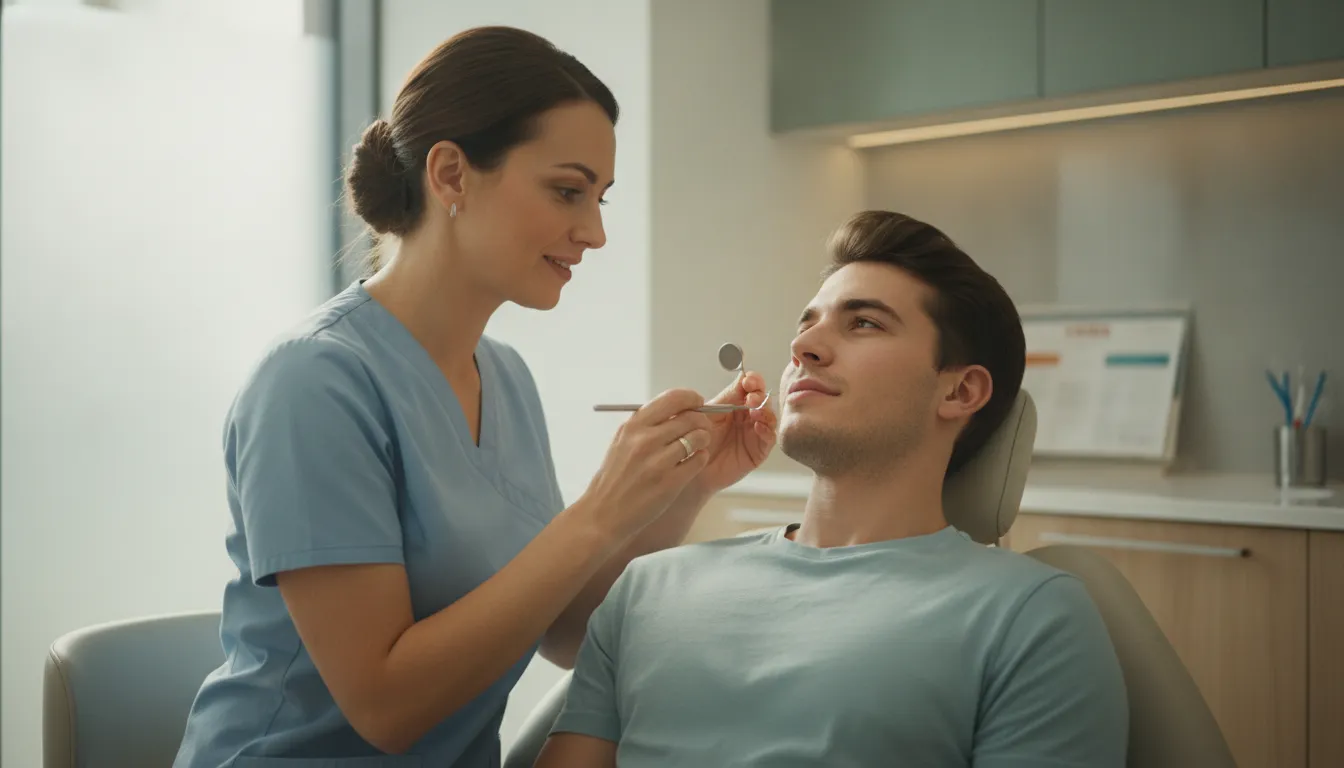
During the visual exam, we look at the remaining tooth, the broken edge, nearby teeth, and the gums. We may assess tenderness, looseness, swelling, and how the tooth responds to gentle testing. A bite assessment can show whether chewing forces are concentrating on the damaged area. We also consider whether the fracture appears limited to enamel or extends into deeper tooth structure. If the pulp is involved, a dentist may need imaging to look for changes around the root.
X-rays are not automatically needed for every chip, but they may be clinically indicated to evaluate the tooth, roots, bone, gums, and supporting structures. At Lowell Family Dental Practice, diagnostic examinations and X-rays are used when appropriate to help clarify what is happening below the surface. We take time to explain what we find and discuss options in understandable terms.
Treatment depends on what the examination shows
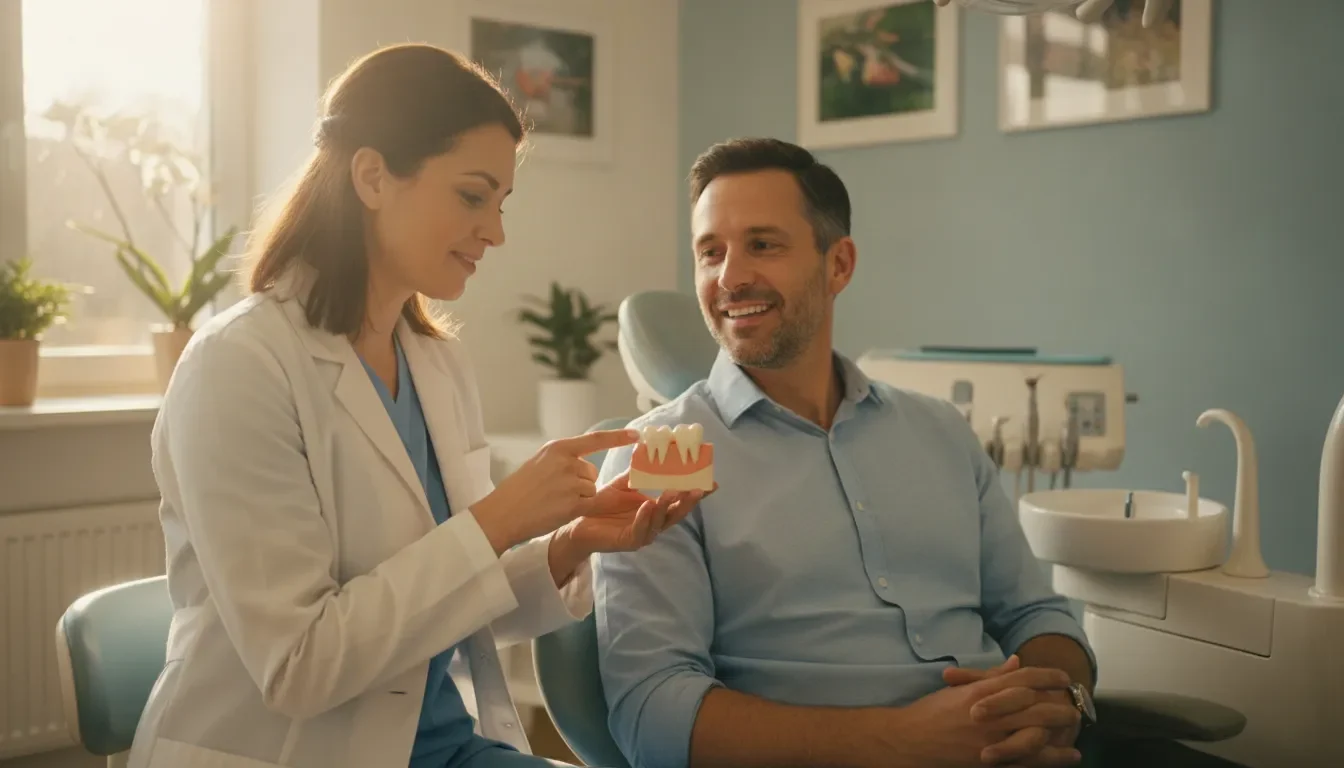
A very small, stable edge may only need smoothing, while a limited defect may be repaired with tooth-colored bonding or a filling. If more structure is missing or the tooth needs additional protection, a crown may be considered. Our dental crowns for damaged or cracked teeth page explains how a crown can help restore function and protect a compromised tooth. A temporary crown may sometimes be used while a permanent restoration is fabricated.
When a fracture affects the pulp or inflammation develops inside the tooth, root canal therapy may be part of the plan before the tooth is restored. You can learn more about root canal treatment and discuss whether it fits your findings. Some severe fractures, including certain root or crown-root breaks, may not be restorable. In those situations, extraction and later replacement options, such as a bridge or implant, may be discussed. No single treatment is right for every broken tooth, and an evaluation is the safest way to determine the next step.
What can cause a tooth to break?
A broken tooth can happen suddenly, or it can reflect changes that developed gradually. An accident, fall, sports injury, or blow to the face may fracture a tooth, even when the tooth seemed healthy beforehand. Dental injuries can also occur during everyday activities at home or school. If a tooth broke after an injury, tell the dentist what happened and when, because the force and surrounding facial injury may affect what they check.
Biting into something hard is another common trigger. Ice, hard candy, popcorn kernels, and similar foods can place more force on a tooth than it can withstand. This is especially true if the tooth already has a crack, a large filling, or another restoration. Existing dental crowns for damaged or cracked teeth can restore and protect certain teeth, but a restoration can also wear, loosen, or fracture and may need evaluation.
Decay can weaken the inside of a tooth before any visible break occurs. As enamel and the underlying tooth structure lose strength, ordinary biting forces may be enough to cause a chip or larger fracture. Weakened enamel can have other causes as well, so a broken tooth is not necessarily a sign that someone did something wrong. Sensitivity or pain may occur, but a small enamel chip may not hurt, which is one reason an evaluation is useful even when symptoms seem limited.
Sports participation increases the chance of a traumatic dental injury, particularly in activities involving contact, falls, or fast-moving equipment. A properly fitted mouthguard can help reduce the risk. More broadly, avoiding chewing ice and very hard foods, wearing protective equipment during sports, and keeping up with preventive dental care can help protect teeth over time.
The cause does not determine treatment by itself. A dentist may consider the fracture’s location, depth, existing restorations, symptoms, and the condition of the surrounding tooth and gums. If you are unsure what to do after a broken tooth, arrange a professional evaluation rather than trying to judge the damage by appearance alone.
How to protect your tooth until your appointment
Until a dentist can examine the damage, the goal is to protect the remaining tooth and keep the area as comfortable and clean as possible. Even a chip that does not hurt may have weakened the tooth. Pain and sensitivity can also change over time, so do not use the absence of symptoms as a reason to postpone an evaluation.
Choose soft foods that require little chewing, and use the opposite side of your mouth when eating. Avoid hard, crunchy, sticky, or chewy foods that could pull at the damaged area or cause another piece to break away. If cold, hot, sweet, or acidic foods trigger discomfort, avoid those temperatures and ingredients until you receive professional guidance. You can gently rinse with warm water if food or debris collects around the tooth. Do not scrub aggressively or probe the area with a sharp object.
If the edge feels sharp against your tongue, cheek, or lip, cover it temporarily with dental wax. Sugar-free gum can also serve as a short-term cushion when dental wax is not available. This is only a protective measure while you arrange care, not a repair. Do not use household glue, nail products, or other adhesives in your mouth, and do not attempt to file, reshape, or reattach the tooth yourself. Home repairs can injure soft tissue, introduce contaminants, or make the eventual treatment more difficult.
Save any piece of tooth you can find. Handle it carefully, place it in a clean, dry container, and bring it to the appointment. Broken fragments should be collected when possible, although a dentist will determine whether a fragment can be used or whether another treatment is appropriate (research on dental trauma).
For discomfort, follow the label directions for any over-the-counter medication you consider. Check warnings, dosing limits, allergies, pregnancy considerations, and interactions with your existing medicines. Do not place aspirin or another medication directly on the tooth or gum. If bleeding will not stop, swelling affects breathing or swallowing, or the injury involved major facial trauma, seek emergency medical care. Otherwise, contact a dental office promptly for an evaluation, because safe temporary care does not replace professional treatment.
How to lower the risk of another broken tooth
After a broken tooth has been evaluated and treated, a few steady habits can help protect your smile. Regular dental examinations give our team an opportunity to look for decay, cracks, worn fillings, bite-related stress, and other changes before they become a larger problem. Examinations and X-rays may be recommended when clinically indicated to assess the teeth, gums, bone, and supporting structures. You can learn more about comprehensive dental examinations and ask which schedule fits your family’s needs.
Daily oral hygiene matters, too. Brush carefully with fluoride toothpaste, clean between your teeth, and follow the preventive recommendations provided for your age and oral health. This is not about blame. Decay and weakened enamel can develop even when someone is trying to care for their teeth. Finding those concerns early can make it easier to discuss appropriate options and protect the remaining tooth structure.
Be cautious with foods and habits that place sudden force on teeth. Avoid chewing ice, hard candy, popcorn kernels, and other very hard foods. Do not use your teeth to open packages or hold objects. If one tooth feels sensitive, rough, or different when you bite, arrange an evaluation rather than testing it repeatedly.
For children, teens, and adults who participate in contact sports or activities with a risk of falls, a properly fitted mouthguard can help reduce traumatic dental injuries. Store it cleanly and replace it when it no longer fits well. Accidents can still happen, but protective equipment is a practical part of prevention.
If decay, enamel weakening, grinding, or an older restoration may have contributed to the break, ask about ways to address that underlying concern. Depending on the findings, restorative care such as a filling or dental crown for a damaged or cracked tooth may be discussed. The goal is a plan that supports comfortable, lasting function without judgment.
Still unsure how quickly to be seen? Contact Lowell Family Dental Practice to discuss your symptoms and next steps with Dr. Gammas and his team.
Frequently Asked Questions
What should I do first after breaking a tooth?
Gently rinse your mouth, collect any tooth fragments, and avoid chewing on the affected side. A cold compress held against the outside of your cheek may help with swelling while you arrange a dental evaluation. Broken fragments should be collected when possible, and professional help is important after dental trauma. [Source]
When does a broken tooth require emergency medical care?
Seek emergency medical care for uncontrolled bleeding, severe swelling that affects breathing or swallowing, major facial trauma, or loss of consciousness. Otherwise, pain, sensitivity, or a sharp edge still deserves prompt dental attention, even if the injury seems small. A dentist can help determine whether the tooth needs immediate treatment or a scheduled repair. [Source]
Can a dentist save a broken tooth?
Sometimes, but the answer depends on how much of the tooth is damaged, where the fracture extends, and whether the inner pulp is involved. An examination and X-rays may be appropriate when clinically indicated. Depending on the findings, treatment may include bonding, a filling, a crown, root canal therapy, or removal and replacement. Evaluation is the only way to identify the suitable option. [Source]
What should I avoid until my appointment?
Avoid hard, sticky, or very hot and cold foods if they trigger discomfort, and do not try to glue or reshape the tooth yourself. Keep the area clean with gentle rinsing and protect a sharp edge with dental wax or sugar-free gum if needed. Contact Lowell Family Dental Practice so the team can listen to your concerns, assess the injury, and explain your options.
Contact us about your broken tooth
A prompt evaluation can help clarify the damage and the next reasonable step, especially if pain, sensitivity, or a sharp edge is making eating difficult. Contact Lowell Family Dental Practice to arrange an evaluation and discuss treatment options with Dr. Gammas and his team.
Written by
Dr. Iham Gammas, DMDBoard-Certified Implant Dentist & Founder, Lowell Family Dental Practice. Fellow & Master of ICOI and IADI. Associate Fellow of AAID.