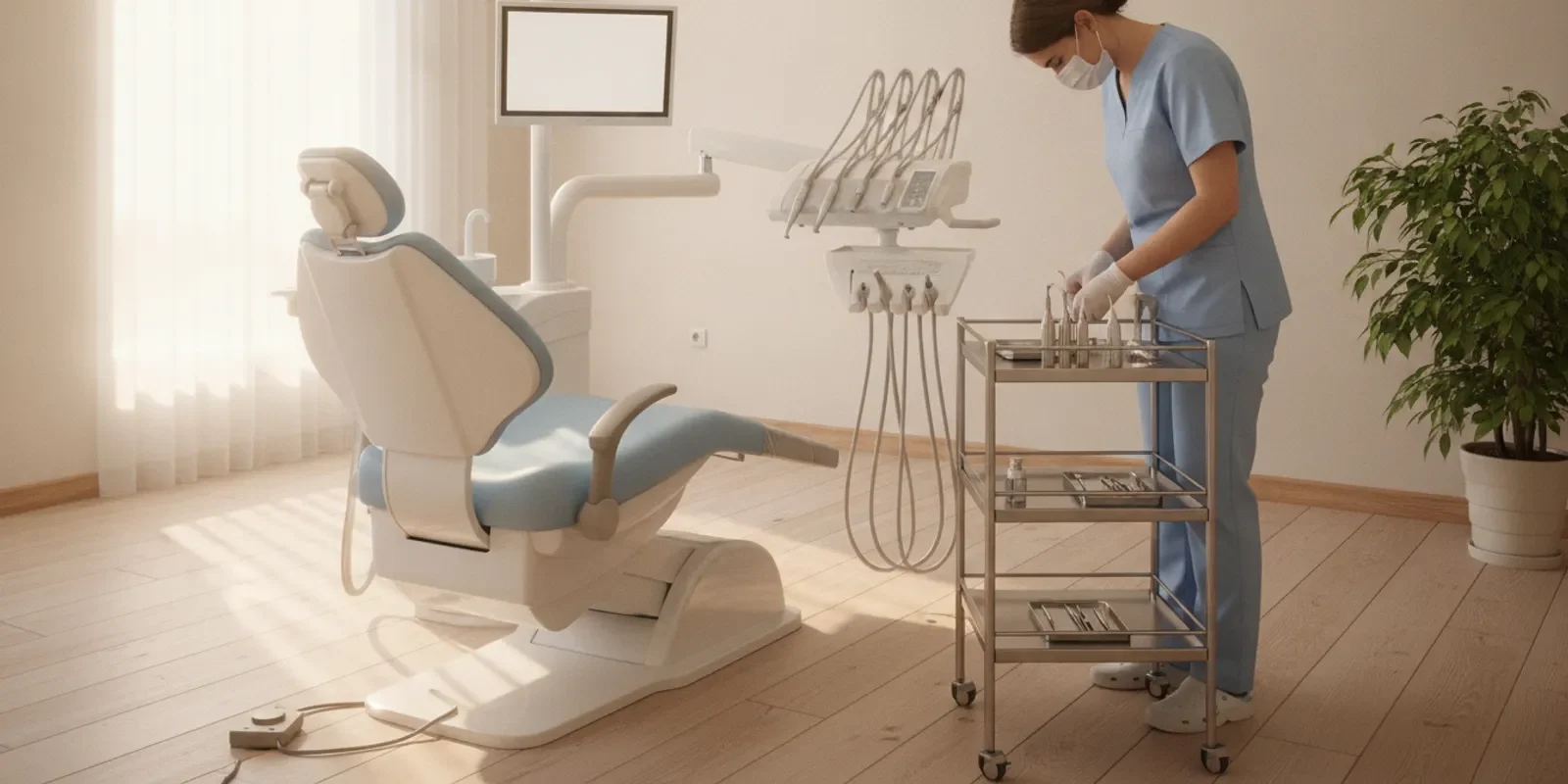
Tooth cap types are the materials used for one custom cover. Those materials include metal alloys, porcelain fused to metal, all-ceramic, zirconia, resin, and stainless steel for a baby tooth. A cap and a crown are the same restoration. What changes is the look, the chewing strength, and which tooth the cap is meant to protect.
Book a crown consultation if you want Dr. Gammas and his team to look at the tooth before you choose a material.
Patients usually arrive with a picture of a white crown and a worry about a back tooth cracking. Both concerns are fair. A front tooth has to disappear into the smile. A molar has to survive years of chewing. The American Dental Association groups these lab-made materials into metal alloys, ceramics, resin composites, and metal-ceramics. The right one depends on the tooth, not on a single best product. That is the comparison this guide covers. Fees and insurance shares live on our cap and crown cost guide, so they stay out of this article.
What a tooth cap actually is
A tooth cap is a custom shell that covers the visible part of a damaged tooth, down toward the gumline. The ADA MouthHealthy page on crowns describes that cover in plain terms. It restores shape and size. It can strengthen a tooth that can no longer hold a filling. It can also protect a weak tooth, rebuild a broken one, or cover a dental implant.
People say “cap” in conversation and “crown” on a treatment plan. In the chair they mean the same thing. The cap does not sit on top of an untouched tooth like a hat. The dentist shapes the tooth so the finished crown has room, then the lab or an in-office mill builds a cover that restores the contours. MedlinePlus describes that as a tooth-shaped cap replacing the part of the tooth above the gumline.
Material is only one decision. The tooth still has to be healthy enough to hold a crown. Decay, a crack, or a short stub can change that picture. Our guide to what to do when little tooth is left for a crown is the better next read. If you are still deciding whether a crown is needed at all, start with why a tooth may need a dental crown.
How tooth cap types get matched to a tooth
We do not pick a material from a menu and hand it to you. At Lowell Family Dental Practice, the exam looks at where the tooth sits and how much healthy structure remains. It also looks at how you bite, whether you grind, and how much the tooth shows when you smile. A material that looks perfect on a front tooth can be the wrong call on a second molar. A material that survives heavy chewing can look out of place in a smile line.
The questions we walk through are practical:
- Where is the tooth? Front teeth are seen in conversation. Molars take the heaviest chewing load.
- How much tooth is left? A short or cracked tooth may need a different foundation before any cap material is discussed.
- What does the opposite tooth do? Some ceramics can wear the tooth they bite against more than metal does.
- Is there a metal concern? A known metal allergy pushes the plan toward a metal-free ceramic.
- Is this a baby tooth? A child’s tooth that will be lost later is a different case from a permanent molar.
Our dental crowns page explains that visit in Lowell. The comparison below is education, not a recommendation for your tooth. Only the exam can say whether a crown is appropriate and which material fits.
Metal alloy caps
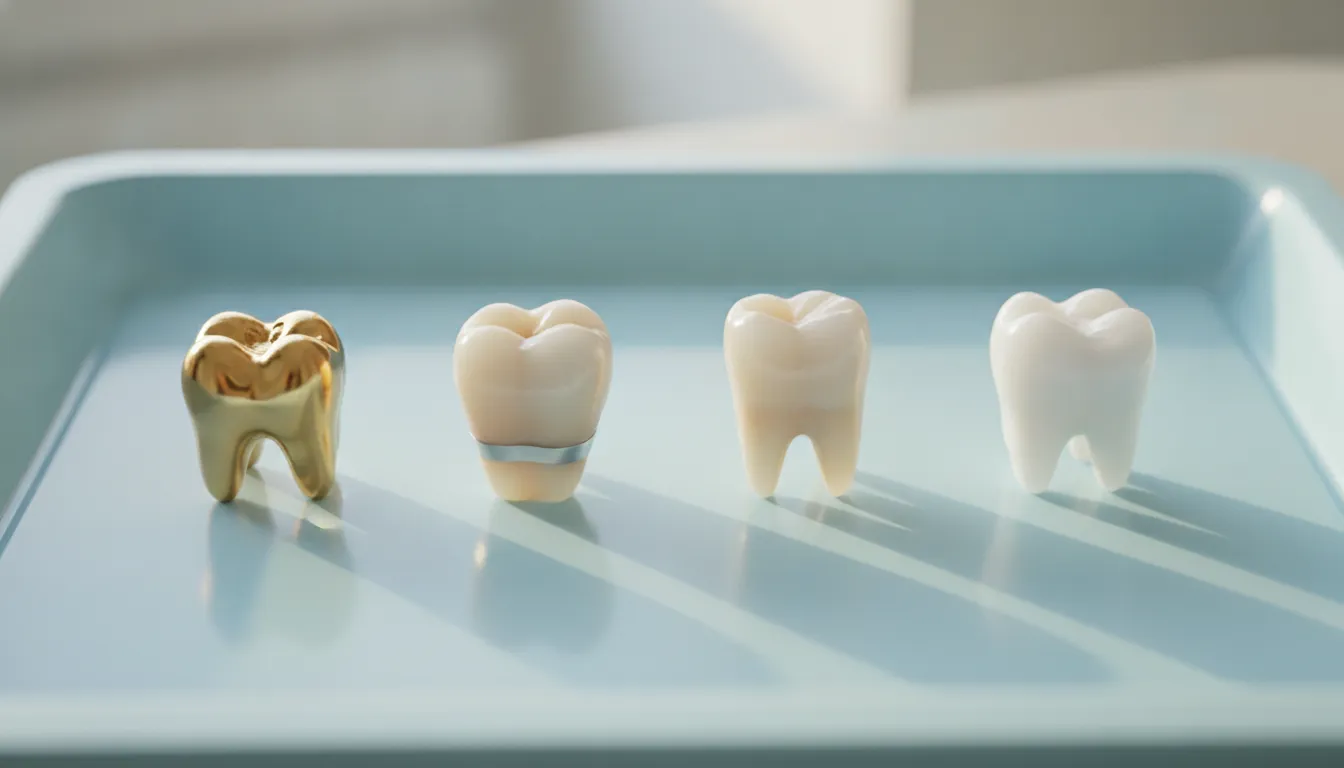
Metal crowns are cast from alloys. High-noble and noble alloys, including gold-based metals, and base-metal alloys are separate families in the ADA’s materials overview. Patients usually notice the color first. The crown looks like metal, so it is almost always planned for a molar that does not show when you smile.
The clinical case for metal is strength in a thin layer. MedlinePlus notes that metal crowns hold up to chewing and grinding, rarely chip, and are among the longest-lasting crown types, while they do not look like a natural tooth. Because the material can be kept relatively thin, the dentist may need to remove less tooth than a bulky ceramic requires. That matters when the remaining tooth is already small.
Metal is a poor match when the tooth is visible, when you want a tooth-colored result, or when you have a documented metal allergy. It is also not a cosmetic upgrade. If the goal is a brighter front tooth, a metal cap is the wrong tool. A conversation about cosmetic dentistry in Lowell may point somewhere else entirely.
Porcelain fused to metal
A porcelain-fused-to-metal cap, often shortened to PFM, bonds a tooth-colored porcelain layer to a metal coping. The metal carries the chewing load. The porcelain is there so the crown does not look like a silver or gold shell. For years this was the everyday tooth-colored crown, used on both front teeth and back teeth.
The tradeoff sits at the edge and in the porcelain. MedlinePlus notes that the porcelain on a PFM crown is more prone to fracture than a crown made entirely of porcelain. Over time the metal edge can become visible near the gum, especially if the gum recedes. The porcelain can also look slightly more opaque than a modern all-ceramic crown because the metal underneath blocks light.
PFM still has a role when a tooth needs a tooth-colored surface and a metal substructure, including some bridge designs. It is less often the first choice for a highly visible front tooth when a translucent ceramic can be bonded in its place. If a bridge is the reason for the crown, the bridges page is the right companion, because the cap is then one piece of a larger restoration.
All-ceramic and lithium disilicate caps
All-ceramic crowns have no metal core. Porcelain and glass ceramics, including lithium disilicate (a material many labs call by the brand name E-max), are chosen because they can mimic the translucency of enamel. Light passes through them more like a natural tooth, which is why they are a common plan for incisors and canines.
MedlinePlus lists the other side of that choice. Ceramic and porcelain crowns can match neighboring teeth. They may suit a metal allergy. They can also wear the opposing teeth more than metal crowns do. They also need enough thickness to resist fracture, so the preparation has to leave room for the material. A very thin, very clear ceramic on a dark underlying tooth can also let that darkness show through unless the lab accounts for it.
We use this family when appearance is the priority and the bite can support it. A front tooth with a moderate chip, a darkened tooth that still has a solid root, or a tooth that shows metal from an older crown are typical conversations. They are not automatic for every smile. A veneer covers only the front surface and removes less tooth. If you are weighing those two looks, read crown versus veneer on a front tooth before you assume a full cap is required.
Zirconia caps
Zirconia is a ceramic, but it behaves differently from a glassy porcelain. Solid zirconia is very strong and more opaque, which makes it a frequent choice for molars that need a tooth-colored crown without a metal core. Layered or more translucent zirconia is used when the tooth shows and the dentist still wants more strength than a traditional glass ceramic.
The ADA notes that newer ceramics and digital milling have made all-ceramic restorations more practical. Strength and appearance can be combined more often than with older porcelains. That is the appeal of zirconia. It is still a ceramic. It can wear opposing enamel if the surface is left rough, and a very opaque zirconia crown can look flat next to a translucent front tooth. The lab finish and the shade matter as much as the brand name.
Zirconia is not a shortcut around the exam. A cracked molar, a tooth that has had a root canal, and a tooth with little structure left can all end up with different foundations under the same zirconia shell. Our notes on a post and crown cover the foundation question, which is separate from which ceramic goes on top.
Resin and stainless steel caps
Resin crowns are tooth-colored, and they cost less to make. MedlinePlus is direct about the limit. They wear down faster, and they crack more easily than other crown types. In an adult mouth we usually treat resin as a short-term cover. It is not the material we want chewing on a molar for a decade. A temporary crown you wear while the lab makes the final one is a different object again. It protects the prepared tooth for days or weeks. It is not one of the permanent tooth cap types.
Stainless steel crowns are pre-made shells. MedlinePlus describes them as a useful temporary, especially for children, because the crown comes off when the baby tooth is lost. They are silver in color and they are not shaped as a custom cosmetic crown. A permanent adult molar is a poor place for one if a custom crown can be made. A primary molar that needs coverage until it falls out is the situation they were designed for.
If a child’s tooth is the reason you are searching, say so when you call. The material conversation for a baby tooth is shorter and more practical than the one for a front tooth in an adult smile.
Side-by-side comparison
This table is a starting point for the conversation, not a prescription. Two teeth in the same mouth can justify two different materials.
| Cap material | Appearance | Common use | Main limit |
|---|---|---|---|
| Metal alloy | Gold or silver | Hidden molars | Shows metal. Poor match for a metal allergy. |
| Porcelain fused to metal | Tooth color over metal | Back teeth and some bridges | Porcelain can chip. A metal edge may show later. |
| All-ceramic | Closest to enamel | Front teeth | Can wear the opposing tooth. Needs enough thickness. |
| Zirconia | Tooth color, often more opaque | Molars that need strength | A rough surface can wear enamel. |
| Resin | Tooth color | Short-term coverage | Wears and cracks sooner. |
| Stainless steel | Silver and pre-made | Baby teeth | Not a custom adult cosmetic crown. |
Strength on a chart is not the same as the right crown. A person who grinds, has a short tooth, or wants front teeth to match in daylight may need a different material. Bring those details to the visit. If you want a sense of how long a well-cared-for crown can serve, that is a separate question we answer in how long a dental crown lasts.
Front teeth and back teeth are different jobs
A cap on a front tooth is judged in photographs, in conversation, and under office lighting. Translucency, the color at the gumline, and how the edge meets the neighboring teeth matter as much as whether the crown survives a sandwich. All-ceramic and higher-translucency zirconia are the materials we talk about first in that setting. Metal and bulky PFM edges are the ones patients notice and dislike.
A cap on a molar is judged by whether you can chew without breaking the porcelain or wearing down the tooth above it. Solid zirconia and metal alloys are common plans there. A glassy ceramic that looks beautiful on an incisor can be the fragile choice on a second molar, especially if you clench. The same patient can reasonably leave with a ceramic crown on a canine and a zirconia crown on a molar. That is not inconsistency. It is two different jobs.
Crowns also show up as the visible tooth on a bridge or on an implant. The material still has to match the job, but the support underneath is different. An implant crown does not have a nerve. A bridge crown is connected to the teeth beside the gap. Those are reasons to read the service page for crowns and bridges rather than treat every cap as a single-tooth repair.
What the material does not decide
Choosing zirconia, gold, or lithium disilicate does not tell us whether the tooth needs a crown. A large cavity, a crack, or a tooth after a root canal can each lead to a crown. Each can also lead to a filling or another plan. The comparison between a crown and a filling is covered in dental crown versus filling. Warning signs belong in signs you may need a dental crown, not in a materials chart.
The material also does not set the fee by itself. Lab time, how much tooth has to be rebuilt, and whether a root canal or a post is involved all change the visit. If cost is the question you came in with, use the cost guide linked above, or ask us about financing at the consultation. Guessing a material because it sounds less expensive can leave you with a crown that chips, shows metal, or wears the tooth it bites against.
Care after the crown is the same idea no matter which material you leave with. The tooth under the edge can still decay. MedlinePlus notes that most crowns should last at least five years and can last 15 to 20 years, and that grinding can chip a porcelain surface. Brush, clean between the teeth, and tell us if the bite feels high. A mouthguard is a bite problem, not a materials problem, but it protects whatever cap we place.
Call (978) 458-1179 and ask for a crown evaluation if a cracked or heavily filled tooth is the reason you are comparing materials.
Frequently asked questions
Which tooth cap type is best?
There is no single best material. A front tooth usually needs a translucent ceramic. A molar that takes a heavy bite may do better in zirconia or metal. The best cap is the one that fits the tooth’s location, the bite, and how much structure is left.
Is a tooth cap different from a crown?
No. Cap and crown are two names for the same cover. The useful difference is the material, not the word on the search page.
What do most dentists use?
Tooth-colored ceramics, including zirconia and lithium disilicate, are common now because patients want a crown that does not show metal. Metal alloys and porcelain fused to metal are still used when strength or a bridge design calls for them. The ADA describes that shift toward ceramics while metal remains an option.
What is the strongest tooth cap?
Metal alloys and solid zirconia are the strong end of the list for chewing. Strength is not the only goal. The strongest-looking choice can be the wrong one if it shows in the smile or wears the tooth above it.
Can I choose a cap if I have a metal allergy?
Tell us about any known metal allergy before the impression or scan. An all-ceramic or zirconia crown avoids a metal core. Do not decide that from a label on the internet. The dentist has to confirm the material the lab will actually use.
Talk through the material at a Lowell visit
Tooth cap types only make sense on a specific tooth. Bring the tooth that bothers you, not a material you picked from a chart. We will look at the location, the bite, the remaining structure, and whether a crown is even the right restoration. Then we can talk about metal, porcelain fused to metal, ceramic, or zirconia in plain language.
Dr. Gammas and his team see patients at Lowell Family Dental Practice for crowns on natural teeth, bridges, and implants. If you want that conversation before a tooth cracks further, call or request a visit.
Request a crown visit or call (978) 458-1179 to meet Dr. Gammas and his team.
Written by
Dr. Iham Gammas, DMDBoard-Certified Implant Dentist & Founder, Lowell Family Dental Practice. Fellow & Master of ICOI and IADI. Associate Fellow of AAID.